
resources

Family Connections

Getting Involved

Tools

Resources

Leadership

About

View District Performance Levels* Due to new ELA assessments, the release of the 2024-2025 report card from USBE will be significantly delayed

Getting Involved

CTESS

Canyons Teacher Effectiveness Support System

The Utah Legislature State Code specifies that teacher evaluation must include:

  1. documentation of student growth,
  2. evidence of instructional quality, and
  3. response to stakeholder input.

Canyons District has established an evaluation process for all licensed educators. The District’s Joint Education Evaluation Committee (JEEC) established the following priorities for an evaluation system that complies with state law:

  • Create a growth plan for all educators, recognizing that in an educator’s first years they will perform at different levels and rates.
  • Ensure that mentoring and coaching for all educators offer multiple opportunities for public practice, feedback, and self-reflection.
  • Use multiple reliable and valid measures to make conclusions about an educator’s potential to be effective throughout their career.
  • Address the importance of an educator’s willingness to apply feedback by incorporating improvement strategies and supports in the district’s educator effectiveness process.

CTESS was updated in 2023 to better align with the updated Utah Effective Teaching Standards released by USBE and continues to revise/update the evaluation system to stay current with Utah State Code and USBE Board Rules.
The purpose of evaluation in Canyons is to prioritize professional growth and support for all educators, retain and promote effective educators, and ensure that every student receives high-quality instruction every day.  With this purpose, the Canyons Teacher Effectiveness Support System (CTESS) has been developed to increase feedback to educators about instruction and increase the use of public practice applications by Canyons professional educators.

The Utah State Office of Education has assigned to following weightings to the three components of educator evaluation for the state:

  • Assessment of Instructional Quality – 70%
  • Evidence of Student Growth – 20%
  • Response to Stakeholder Input – 10%

These weighting percentages are used to determine the final rating of Ineffective, Emerging/Minimally Effective, Effective, or Highly Effective. 

The Utah state law requires a summative evaluation every four years for Career educators and every year for Provisional educators. 

  • For Career educators, a formative evaluation occurs the three years between summative evaluations. 
  • For Provisional educators, the rating they receive in the first two years in the district will provide the feedback and access to coaching support needed to increase performance on any skills that are found to be deficit. It is expected that educators will earn an overall “Effective” rating by the end of their third year.

CTESS for Teachers is grounded in twelve standards developed by aligning the Utah Effective Teaching Standards and Canyons District MTSS Framework.  The CTESS Standards represent the essential ingredients for high quality instruction that defines teacher effectiveness.

Standard 1: Classroom PBIS (Positive Behavior Intervention and Supports)

Implements rules and procedures to effectively maintain a positive learning environment.

Standard 2: State Core Standards

Uses the Utah State Core Standards or approved state curriculum when planning lessons

Standard 3: Collaboration

Actively problem solves as a collaborative team member by problem solving with data; giving and receiving feedback; building a productive shared culture of learning; and enhancing the knowledge and skills of self and others

Standard 4: Connections and Relevance

Makes connections to purposefully engage learners in learning tasks relevant to the learner

Standard 5: Student Engagement

Uses a variety of evidence-based instructional techniques to promote student engagement, learning, and communication skills through various questioning strategies (CSD instructional priorities)

Standard 6: Feedback

Uses effective feedback practices in the instructional setting to provide timely and descriptive feedback that will promote high quality student work

Standard 7: Cognitive Rigor

Provides students with meaningful opportunities to engage in higher level thinking to solve applied problems using academic skills such as analyzing, synthesizing and decision making

Standard 8: Data Use

Independently and collaboratively uses assessment data to document student progress to promote student growth of all

Standard 9: Scaffolding

Designs, adapts and delivers appropriate and challenging learning experiences based on students’ diverse strengths and needs

Standard 10: Professional Learning

Engaging in and valuing constructive feedback, reflective practices, professional learning, and collaborate activities that support professional, instructional, and schoolwide improvement

Standard 11: Advocacy

Advocates for learners, the school, the community and the profession

Standard 12: Ethical Behavior

Demonstrates the highest standards of legal, moral and ethical conduct as specified in Utah State Board Rule R277-515-10 and CSD policies

Nationally, school districts have been scrambling to adhere to state and federal mandates that define teacher evaluation. The Canyons District’s Joint Educator Evaluation Committee (JEEC), which includes principals, instructional coaches, teachers, and parents studied current policy, research, and reported data about educator evaluation from around the country to made recommendations.  These recommendations were then translated into observation protocols and planning templates.  All administrators, and many teachers and coaches, participated in piloting of the protocols and templates to provide feedback that lead to numerous improvements to the system.
Teacher surveys have provided a wealth of information and continue to guide refinements to CTESS. Administrators provide feedback to the administrator over evaluation development on an ongoing basis. All updates to the CTESS evaluation system are made in order to increase support and decrease complexity of the system to achieve the goal of providing Canyons educators with the support they need to be effective educators. Remediation and support, not dismissal, is the goal of CTESS. Educators who are willing to improve their practice based on the feedback they receive will be offered coaching support to help them achieve their goals.

The CTESS process includes:

  • A yearly self-assessment and Professional Learning Goal
  • Classroom observations
  • Documentation of content-specific educator practices (i.e. lesson plans, student records management, student work samples, etc.)
  • Collaboration, Teaming, and Meeting Participation
  • Professionalism and Ethical Conduct
  • Response to Stakeholder Input
  • Student Growth
  • Growth and Support – The process is focused on growth and provides educators with actionable feedback. If an educator receives a lower rating on a standard, they will receive specific feedback on how to increase their effectiveness in that standard. Coaches and mentors are available to assist and support educators in their improvement efforts. 

Student Growth will be measured as the educator analyzes data, creates a growth goal, adjusts instruction to meet the growth goal, and reflects on the entire process.

Research indicates that well-crafted student surveys are reliable and valid predictors of student achievement and valuable sources of feedback to improve instruction. Separate surveys for early elementary, upper elementary, and secondary students have been created.. Each survey has been statistically analyzed to ensure its reliability and validity.

CTESS

Americans with Disabilities Act (ADA) Statement

Canyons School District is committed to making this website compliant with the ADA. At this time, we recognize that not all areas of this website may be ADA compliant. We are currently in the process of redesigning and creating new website content to be compliant with the W3C Level Two guidelines. If you are experiencing issues with this website, please contact us here communications@canyonsdistrict.org

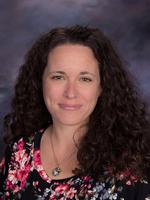
Lucie Chamberlain

Alta View Elementary

If a movie about super teachers were ever made, Lucie Chamberlain would be a prime candidate for a leading role. Fortunately for her kindergarten students at Alta View Elementary, she already thrives in a supporting role for them. Parents thank her for being a “super teacher.” She is also described as an “amazing colleague.” Whether students need help in the classroom or from home while sick, Lucie goes above and beyond to help them learn, overcome fears, and feel important and cared for. Lucie is the reason a number of kids went from hating school to loving it, according to parents. The way she exudes patience, sweetness, positive energy, and love for her students with special needs melts is appreciated and admired. One parent noted: “Both my kids wish she could be their teacher forever.” Another added:  “She treats every student like their learning and their feelings are her priority.” Super teacher, indeed!

Specialty Schools

High Schools

Elementary Schools

Middle Schools