
Updated Jan. 22, 2025
Canyons District Boundary and Enrollment Study
PLANNING FOR THE FUTURE
Faced with declining elementary enrollment, driven by Utah’s falling birth rate and rising housing costs, Canyons School District is taking a careful look at elementary school boundary changes and school consolidations/closures to ensure all students continue to benefit from optimal class sizes and a full choice of academic programs in safe, well-maintained schools — now and for years to come. This boundary study will also lay the groundwork for upgrading schools to better serve combined school communities.
What Changes are Being Proposed?
The following boundary-change ideas have been proposed by the Long-Range Planning Committee as a starting point to jump-start the public input process. The proposals are summarized in the descriptions below, which are accompanied by interactive maps that allow you to enter your address and zoom in to more easily identify key landmarks. After reviewing this information, we welcome your feedback, ideas and questions.
Following months of public input, Canyons’ Long-Range Planning Committee adjusted its initial recommendations for the East Central region to better reflect the expressed desires of families and employees who voiced a desire to keep communities together while honoring existing middle and high school feeder patterns.
Under recommendations approved by the Canyons Board of Education on Jan. 20, 2026: Granite, Park Lane, Willow Canyon, Lone Peak, and Quail Hollow elementary schools will continue operating with the existing boundaries for the 2026-2027 school year, providing an additional 90 days to study two new proposals. Any changes that might ultimately be approved would not take effect until the 2027-2028 school year.
In order to provide clear notice, allow time for families to review the updated proposals, and ensure continued opportunity for meaningful feedback before any further consideration by the Board, the District is restarting a full 90-day public input period.
Recommendation A and B
East Central Region: Granite, Park Lane, Lone Peak, Willow Canyon, and Quail Hollow elementary schools
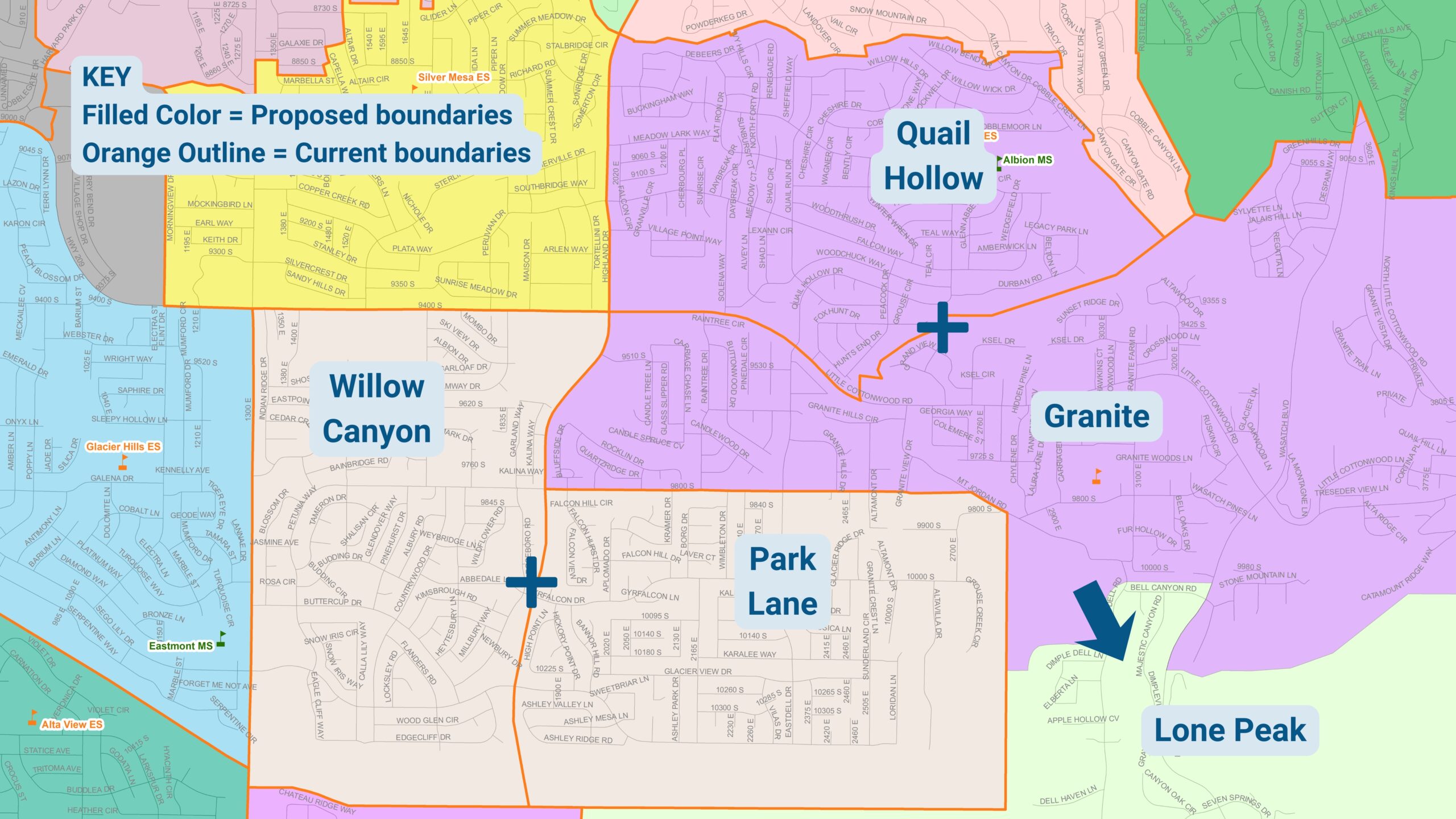
Granite, Park Lane, Quail Hollow, Willow Canyon, and Lone Peak elementary schools would continue operating with the existing boundaries for the 2026-2027 school year, providing additional time to study two new proposals derived from feedback from families and employees. These proposals would be for the 2027–2028 school year and are:
- Open for public input immediately (90-day notice, effective Nov. 11, 2025).
- Vetted at public hearings in January — February, 2026.
- Aimed at keeping communities and feeder pathways together.
- Aimed at strengthening enrollment and preserving access to academic opportunities.
- Aimed at optimizing class sizes, use of school taxpayer-funded facilities.
Proposal A:
- The southeastern portion of Granite Elementary’s boundary (about 40 students) would transition to Lone Peak Elementary to align with the topography of the Dimple Dell Park (the area south of Dimple Dell Road between dimple Dell and Wasatch Blvd).
- The remainder of Granite would consolidate with Quail Hollow in the Quail Hollow building.
- Estimated combined enrollment: 555 (515 general education students plus 40 EEC students).
- Granite’s EEC would stay with the newly combined school community.
- This proposal preserves the Albion/Brighton feeder pattern.
- Quail Hollow has capacity to accommodate Granite without the need for portables.
- Quail Hollow’s three preschool classes and ABS unit would need to relocate.
Proposal B:
- All of Park Lane would combine with Willow Canyon in the Willow Canyon building.
- Estimated combined enrollment: 580 (535 general education students plus 45 ACC students).
- Park Lane ACC would stay with the community/feeder.
- This proposal preserves the Eastmont/Jordan feeder pattern.
- Willow Canyon has the capacity to accommodate Park Lane without the need for portables and has separate bus and patron drop-off/pick-up areas.
- Willow Canyon’s two preschools would need to relocate.
- Willow Canyon has a better Facility Condition Index score than Park Lane.
- An estimated 100 Park Lane students could still walk.
Recommendation No. 3
Alignment of Middle School Feeders
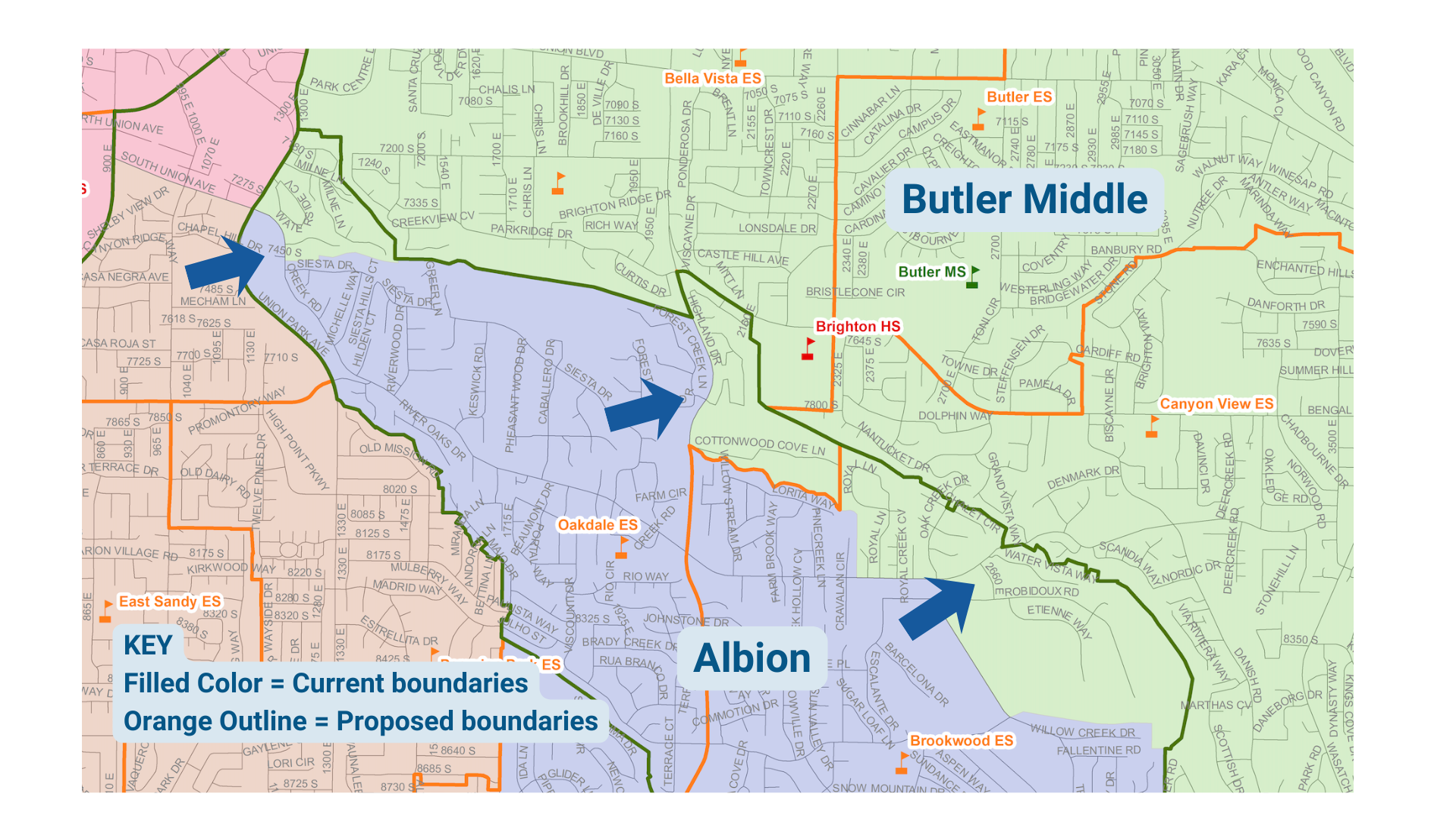
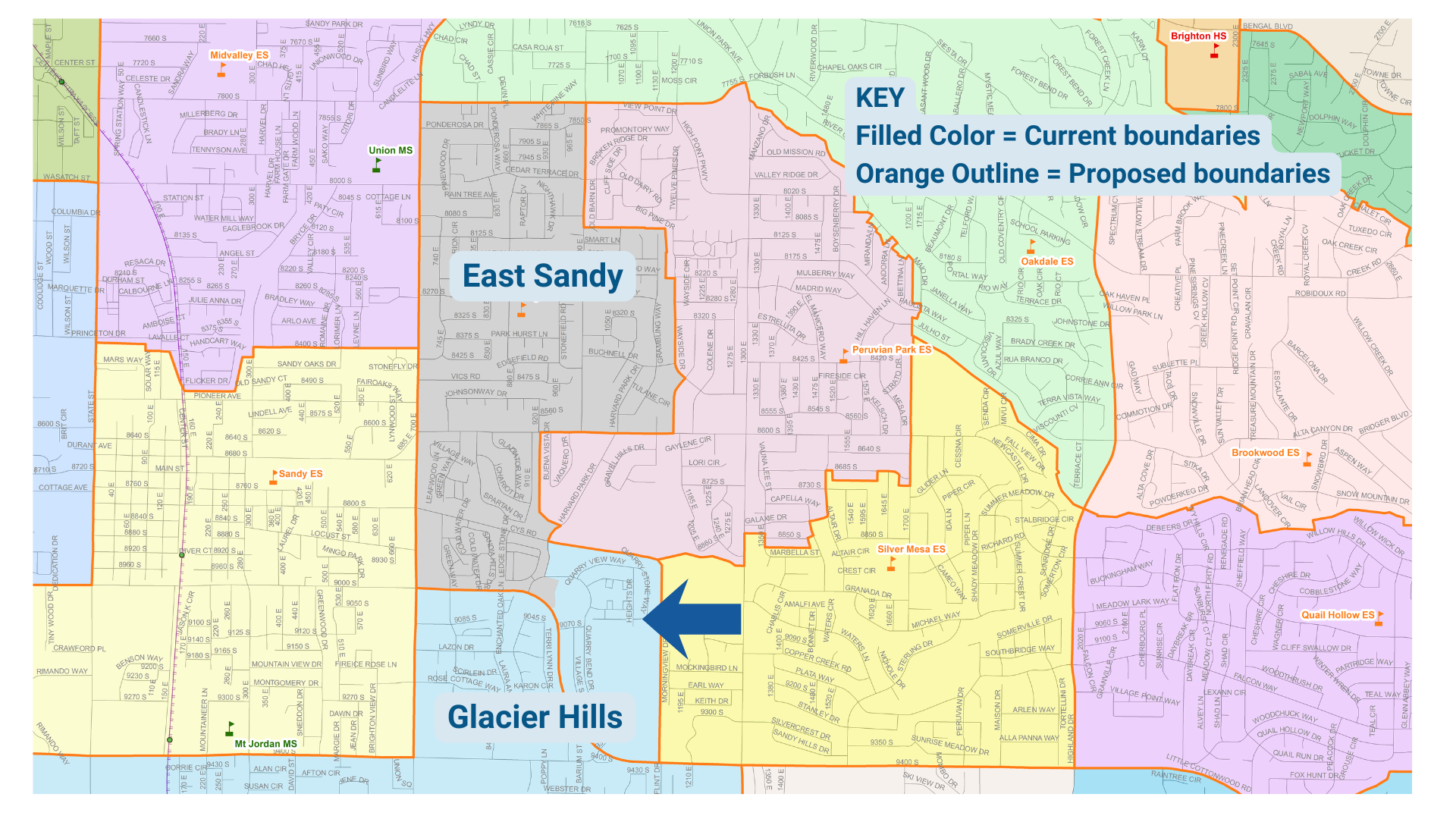
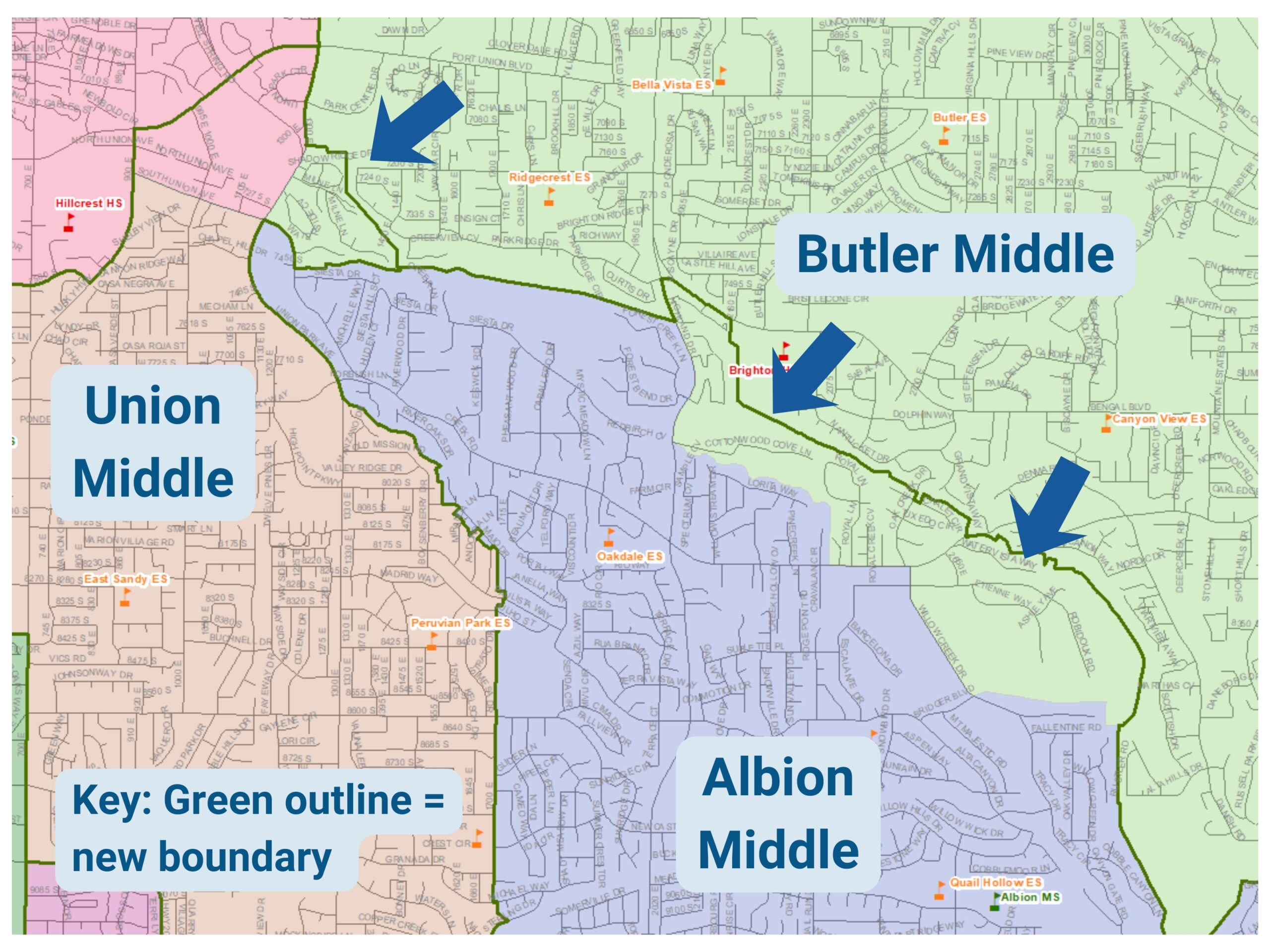
Under this recommendation, some surgical changes would be made to elementary school boundaries to align with middle school feeders. Small changes would also be made to middle school boundaries to create closer alignment with elementary boundaries, geographic features, and neighborhoods. Aligning feeder patterns allows students to level up with familiar classmates, easing the anxiety associated with starting over in a new environment. Here are the recommendations:
- A small portion (20 students) of Glacier Hills Elementary School’s boundary (the Quarry Bend area north of 9000 South) would transition to East Sandy Elementary to align with Union Middle School’s boundary.
- Oakdale Elementary School would have two feeders (Oakdale>Albion Middle>Brighton High) and (Oakdale>Union Middle>Hillcrest High). Currently, Oakdale feeds into four middle schools.
- All of Brookwood Elementary School’s students would attend Albion Middle School. Currently, the school feeds into both Albion Middle and Butler Middle.
The following secondary alignments are being paused for further review as the Long Range Planning Committee holistically studies feeder alignments to support K-12 continuity, academic choice and programming:
- Under Review: A portion of Granite Elementary (east of Highland Drive and north of 9800 S.) would feed into Eastmont Middle School to align with Jordan High School’s boundaries.
- Under Review: All of Silver Mesa Elementary would attend Union Middle School. Currently, the school feeds into Union Middle and Albion Middle.
- Under Review: The region of Granite Elementary that is being considered for transition to Lone Peak Elementary would attend Indian Hills Middle.
- Under Review: All of Sprucewood Elementary would attend Indian Hills Middle School. the impacts on surrounding communities and enrollment and permit trends are to be studied.
- Under Review: The special busing allowance for Indian Hills Middle that was temporarily granted in 2017 serving students west of 300 East in Draper and Sandy will be suspended.
Recommendation No. 4
Alignment of High School Feeders
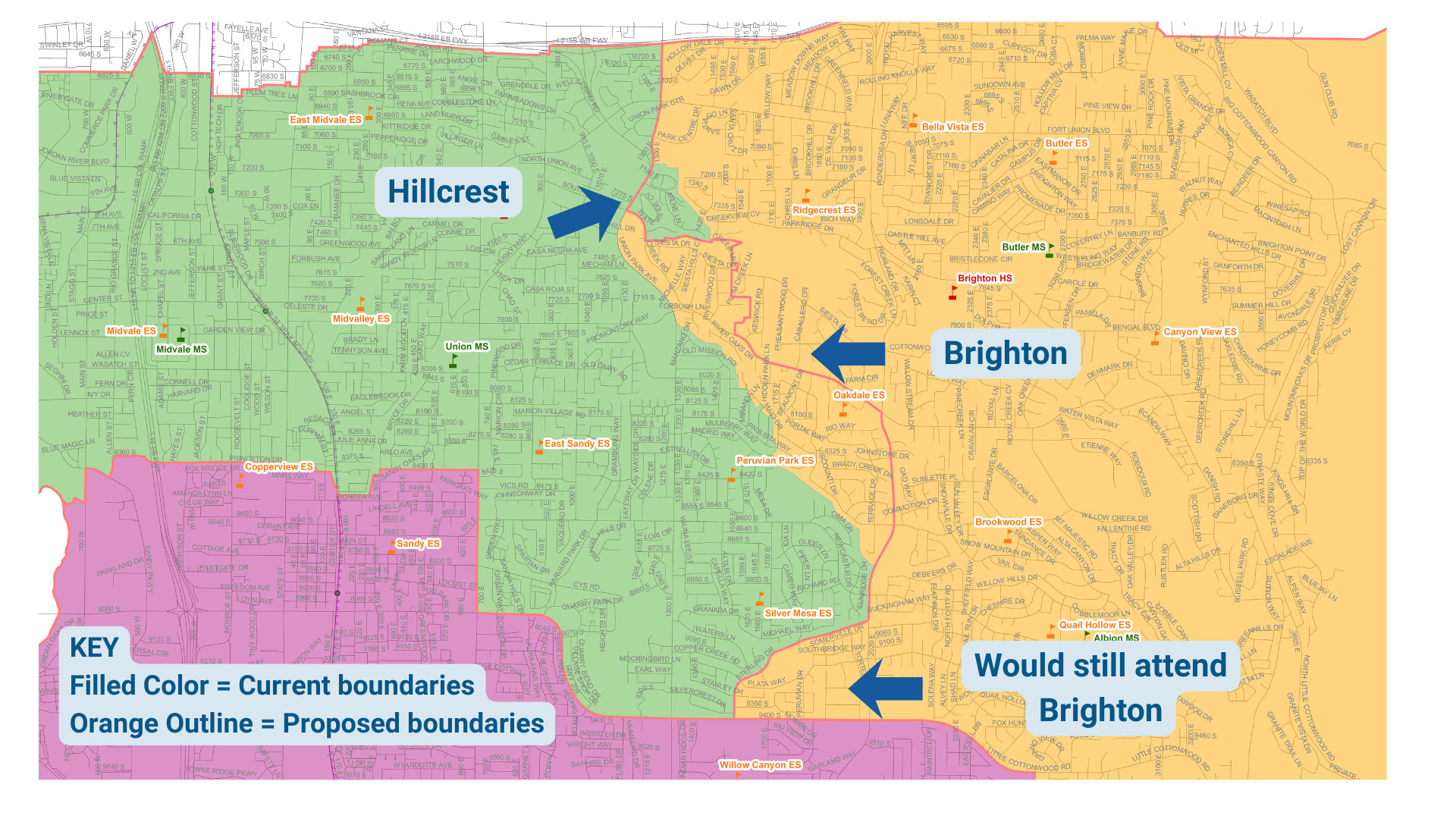
As with middle schools, similar efforts are being made to better align high school boundaries with middle schools, elementary schools, natural geographic features, and neighborhoods. Here are the recommendations:
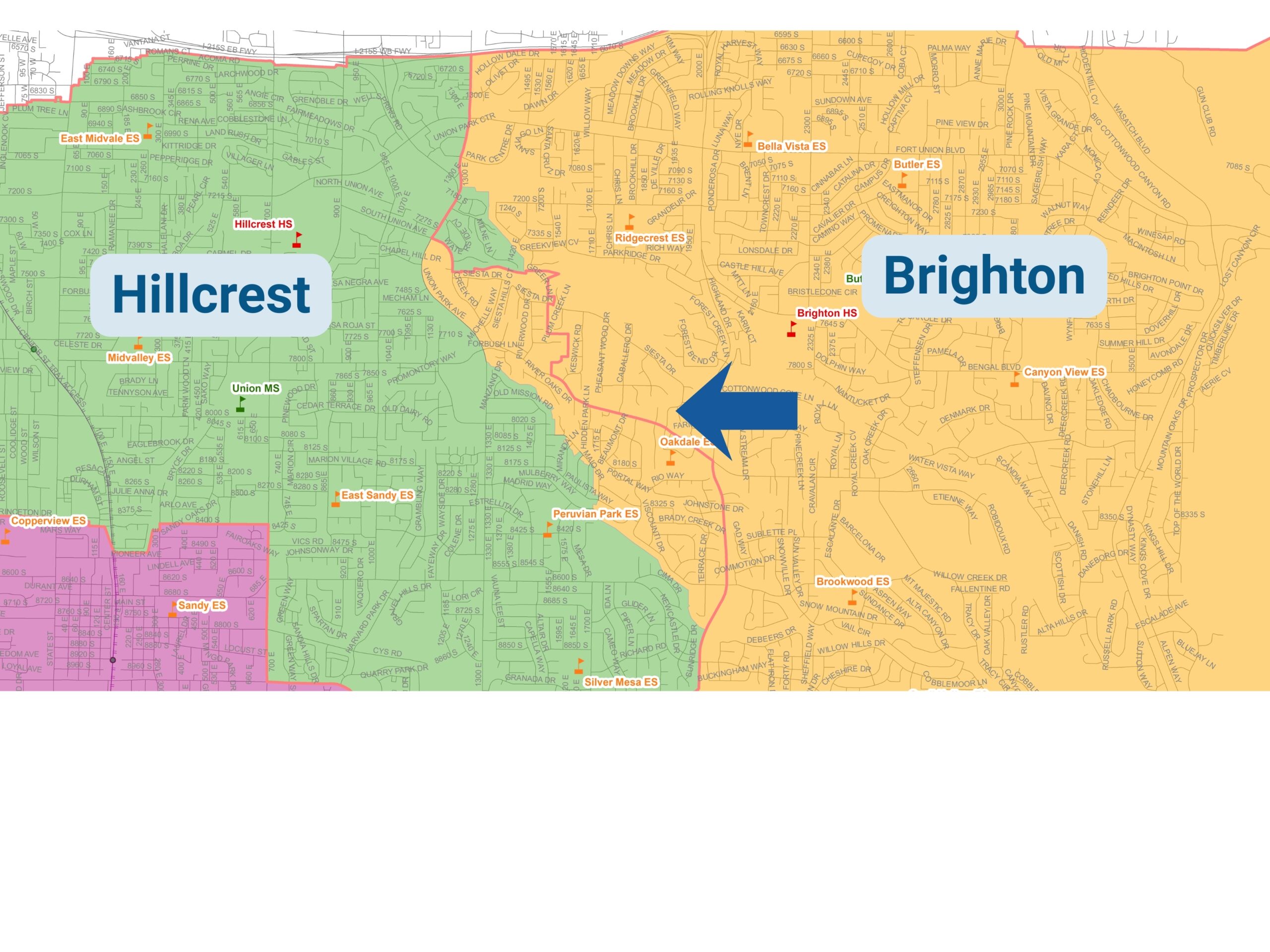
- Oakdale Elementary School would have two feeders (Oakdale>Albion Middle>Brighton High) and (Oakdale>Union Middle>Hillcrest High). This would require some students who currently attend Brighton to attend Hillcrest and vice versa.
- Students who currently attend Hillcrest or Brighton would be grandfathered in on a special permit until they graduate.
The following secondary alignment is being paused for further review as the Long Range Planning Committee holistically studies feeder alignments to support K-12 continuity, academic choice and programming:
- Under Review: All Silver Mesa Elementary students would feed into Hillcrest High in alignment with Union Middle’s boundaries.
What is the Timeline and Process for Feedback?
In June, 2023, an independent firm, Applied Economics, reported on findings of a demography study looking at enrollment trends.
In April 2025, Canyons District’s Long-Range Planning Committee recommended that the Canyons Board of Education undertake a boundary and enrollment study of below-capacity elementary schools.
On May 6, 2025, the Board approved the boundary study and authorized the launch of a web portal to keep the community informed of progress and make it as easy as possible for patrons to provide feedback. Families were notified of the boundary study via email and the District’s website. This web page has been, and will continue to be, updated regularly. Per Utah Code Section 53G-4-402(24), families, employees, and patrons have received direct communication inviting their input via:
Email, text notifications
Postcards
Flyers
Newsletters
In August, 2025, meetings were held with faculty members, administrators, and School Community Council and PTA leaders of the eight elementary schools under review.
On Sept. 2, 2025, Canyons District’s Long-Range Planning Committee, after thorough study, made some boundary-change and school-consolidation recommendations. Draft scenarios were presented to the Canyons Board of Education, marking the beginning of a months-long effort to gather community input on the recommendations. The feedback received informed proposals brought to the Board of Education for further consideration. Employees and households affected by the proposed changes were directly notified, inviting them to attend a community meeting or submit comments and questions online or by emailing communications@canyonsdistrict.org. The proposed changes were recommended to take effect with the start of the 2026-2027 school year.
On Oct. 7, 2025, the Board commissioned independent civil and traffic engineering studies to examine the fitness of the Park Lane and Granite facilities for increased traffic flows, transportation needs in the advent of a school consolidation. Throughout October, four public hearings were held to gather feedback.
On Nov. 11, 2025, the Board considered, under a second reading, proposed boundary changes and school consolidations/closures for the northeast region of the District. Under a first reading, the Board considered new recommendations for the East Central region. Under those recommendations, Granite, Park Lane, Quail Hollow, Willow Canyon, and Lone Peak elementary schools would continue operating with the existing boundaries for the 2026-2027 school year, providing additional time to study two new proposals derived from feedback from families and employees. These new recommendations marked the start of another 90-day public input period.
On Dec. 2, 2025, the Board approved several school-boundary adjustments. These changes — which include combining Ridgecrest and Bella Vista elementary schools to create a stable, 600-student community — take effect at the start of the 2026–2027 school year (see more detailed information at the bottom of this webpage).
On Jan. 20, 2026, the Board voted to re-start the full 90-day public input period in order to provide clear notice, allow time for families to review the updated East Central region proposals, and ensure continued opportunity for meaningful feedback before any further consideration by the Board. Any changes that might ultimately be approved would not take effect until the 2027-2028 school year.
How Can Stakeholders Provide Feedback?
Throughout this process, there have been, and will continue to be, multiple avenues and opportunities to give input. Any feedback received will inform final proposals, which will be brought to the Canyons Board of Education for further consideration. Impacted employees and families will be directly notified with invitations to attend one of the community meeting listed below. Here’s how community members can provide feedback, ask questions, and stay informed.
FOUR WAYS TO GIVE INPUT
- Email communications@canyonsdistrict.org
- Submit comments and questions through our online portal.
- Attend a Board meeting (see schedule here) and participate in the public comment portion of the meeting.
- Attend Your Community Meeting:
Tuesday, March 10, 6 p.m. — Granite Elementary, 9760 S. 3100 East, Sandy
Thursday, March 19, 6 p.m. — Park Lane Elementary, 9955 Eastdell Dr., Sandy
The community meetings will start promptly at 6 p.m. After a brief presentation, the Canyons Board of Education will open up the meeting to public comment. Patrons who wish to speak in person will each be allotted two minutes. Written comments may also be submitted on provided notecards or electronically using the QR code below. Patrons who do not have a seat in the main meeting room will be asked to find a seat in overflow seating. To encourage civil discourse and respect of all opinions, patrons may not bring signs or posters and are asked to refrain from applause during the duration of the meeting. Comments made are part of the public record of the meeting.
What is a Boundary Study and Why is it Needed?
When enrollment drops too low at a particular school, it becomes harder to offer the full range of academic programs, extracurricular activities, and services that families expect and students deserve. While there is no perfect size, the goal is to strike a balance so schools can give students personalized attention while also giving parents a choice of subject offerings, extracurricular activities, and class assignments. Optimally, in Canyons, we strive to have enough students to fill three to four classes per grade level — at minimum, two classes. Any changes that come from this study will be done with care, compassion, and community input. Even if schools are consolidated, our goal is to keep students and teachers connected, wherever possible, with peers and trusted staff members. We are committed to:
- Maintaining optimal class sizes and access to academic opportunities
- Keeping neighborhoods and school communities together wherever possible
- Fairly distributing funding and staffing across schools
- Aligning feeder systems for greater continuity
- Maximizing the use of taxpayer-funded school buildings
- Planning for the upgrade and modernization of school facilities
- The thoughtful placement of special programs
- Considering trends in student transfers
- Considering the capacity and condition of school buildings (ADA and school safety compliance, etc.)
- Considering impacts to transportation (busing and safe walking routes)
- Considering the use of school playgrounds and fields
Frequently Asked Questions
Is there an optimal size for an elementary school, in terms of enrollment?
When enrollment drops too low at a particular school, it becomes harder to offer the full range of academic programs, extracurricular activities, and services that families expect and students deserve. While there is no perfect size, the goal is to strike a balance so schools can give students personalized attention while also giving parents a choice of subject offerings, extracurricular activities, and class assignments. Optimally, in Canyons, we strive to have enough students to fill three to four classes per grade level — at minimum, two classes. In Utah, schools are funded on a per-pupil basis, and when enrollment drops cause a misalignment between class sizes and staffing ratios, school principals make difficult choices about how to allocate funding. For a detailed description of the data crunching that goes into determining how to staff schools, tune into Episode 112 of the Connect Canyons podcast. At the inception of the District in 2009, the Canyons Board of Education approved staffing ratios that are allocated for each grade:
- Kindergarten is staffed at 22.15 students per class
- Grades 1-3 are staffed at 22.3 per class
- Grades 4-8 are staffed at 26.3 per class
What will happen with the closed schools?
We have no plans to sell these schools. These buildings are valuable resources for our community, and we want to preserve them. Enrollment trends could shift over the next 10-15 years and we may need these properties again. In the meantime, we often use vacant schools as “swing sites” to temporarily house students while their schools are being renovated or rebuilt. This minimizes disruption for families and speeds up construction. Canyons takes great pride in in caring for its schools and we’ll continue to maintain these buildings so they remain an asset for years to come.
If schools are consolidated, what will happen to class sizes?
It may seem like bigger schools would translate to bigger class sizes, but the opposite is actually true. Consolidating schools helps us keep class sizes small and balanced. For example, if a school has only one first-grade class with 33 students, we can’t divide that group without doubling staff costs. But if 72 first-graders are together, we can hire three teachers and form classes of 24-25 students each. This way students continue to receive personalized attention while families enjoy a choice of class assignments and greater number of academic opportunities.
My child’s school boundaries are changing and we’re being assigned to a different school. Will my child have to move schools?
Not necessarily. If your student is currently enrolled in a school at the time boundaries shift, you can apply for a School Choice transfer permit to have your child continue attending that school until they complete the final grade offered there, or age out. These permit requests will be given priority consideration. Siblings of current students, even those who are attending on permit, will also receive priority consideration in the permit process. The school transfer application window for the 2026-2027 school year opens Saturday, Nov. 15, 2025, at 10 a.m. and closes at midnight on Friday, Feb. 6, 2026.
Note 1: Keep in mind that in line with Canyons District policy, transportation services are only provided for students who live within a school’s official boundary. Students who choose to stay at their school after a boundary change may lose access to busing and will need to arrange their own transportation.
Note 2: Per District policy, permits do not follow students to middle school and high school. If a student lives outside the boundaries for their preferred secondary schools, they will need to apply for permits to attend those schools.
What happens to the Open Enrollment permits of out-of-district or out-of-boundary families who currently attending a school that is being closed? Will their permit follow them to the new boundary school?
Yes. Students who are attending a school on a permit that is being closed will automatically be able to move to the new boundary school. In other words, their Open Enrollment permit will move with them. If they live outside the boundaries for that school’s feeder schools (middle school and high school), they will need to apply for permits to attend those schools.
How do boundary changes affect Open Enrollment (permit) season?
Families not impacted by boundary changes will apply for permits as usual during the regular Open Enrollment window (Nov. 15, 2025 – Feb. 6, 2026). Families impacted by a boundary change will have the opportunity to apply for an Open Enrollment permit to stay at their current school until they age out. Schools will not process any permits — boundary or Open Enrollment — until after Feb. 6, 2026. After boundary-impacted permits are honored, schools will review Open Enrollment permits in the order received, based on space availability. Families may continue to submit permits after Feb. 6, but placement will depend strictly on space.
How might Utah’s Open Enrollment law impact the proposed boundary changes?
Utah is an Open Enrollment state, which means that students may attend any public school of their choice, as long as the school has the capacity, and the student is willing to provide their own transportation. Therefore, even when boundary changes are made, many students can and will decide to choose a school other than their boundary school. This means that the full impact of any boundary adjustments are not generally felt until several years after the change has been made.
School Boundary, Consolidation Decisions for 2026-2027
Following months of study and community input, the Canyons Board of Education on Tuesday, Dec. 2 approved several school-boundary adjustments.
These changes — which include combining Ridgecrest and Bella Vista elementary schools to create a stable, 600-student community — take effect at the start of the 2026–2027 school year. The goal of the adjustments is to balance enrollment and class sizes, improve feeder patterns, and support students with strong, well-resourced learning environments. Click here to view interactive 2026-2027 school year boundary maps.
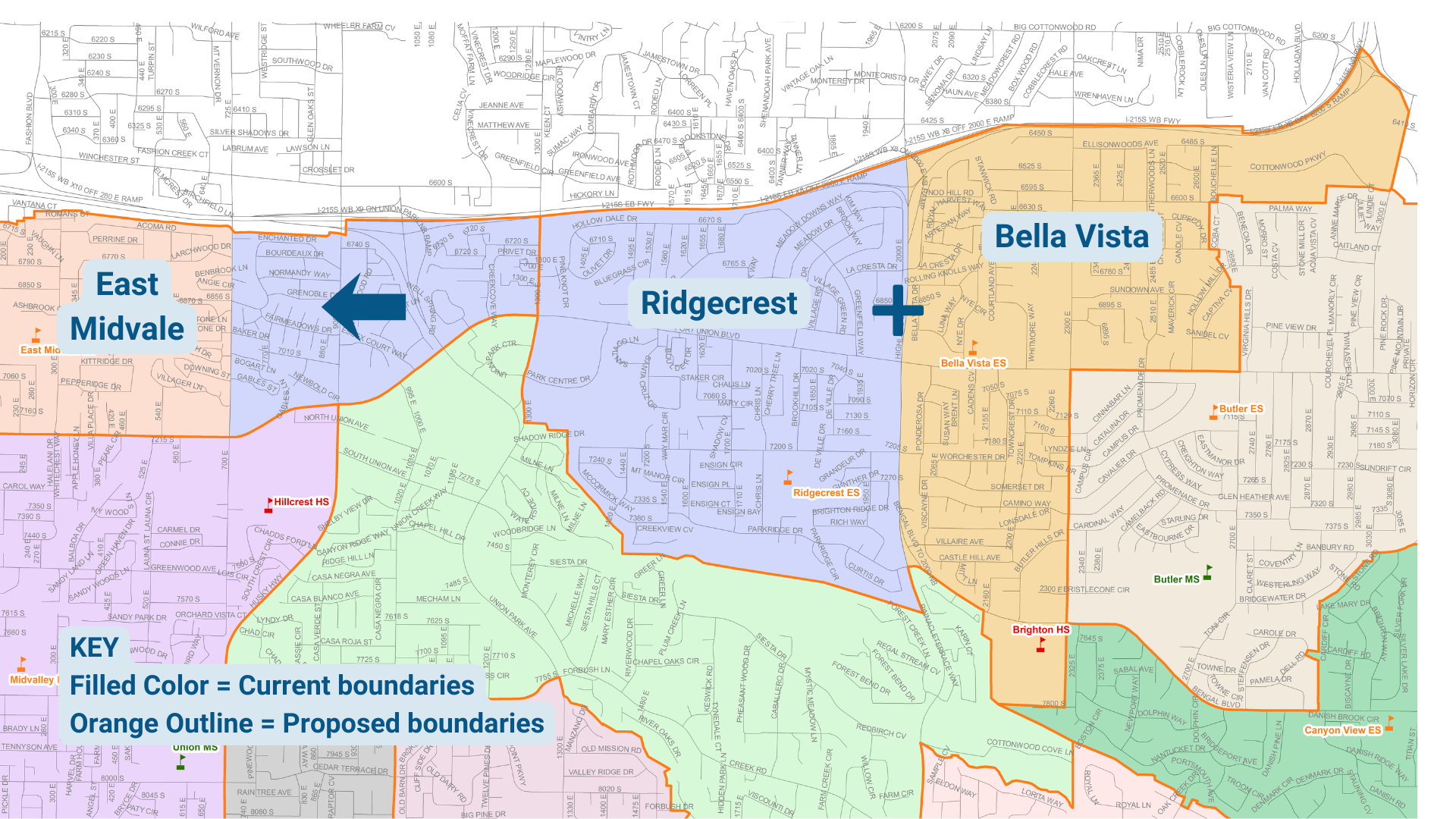
Ridgecrest–Bella Vista Consolidation and Ridgecrest-East Midvale Boundary Change
- Bella Vista Elementary will merge with Ridgecrest Elementary to form a new school community of approximately 600 students.
- Students currently living within the Bella Vista boundary will attend Ridgecrest as their assigned boundary school and bus transportation will be provided. Ridgecrest is located less than a mile from the Bella Vista building.
- Ridgecrest students living west of 1300 East will be reassigned to East Midvale Elementary. This will bring East Midvale’s projected enrollment to about 540 students and improve alignment with Midvale Middle boundaries. Bus transportation will be provided for these students to East Midvale.
- The Bella Vista facility will close as an elementary school but will remain a District asset.
- The ABS (Academic Behavior Support) classrooms currently at Bella Vista will move to Brookwood Elementary.
- Bella Vista’s preschool classes will merge with other local programs, and new preschool classrooms will open at Oak Hollow Elementary.
- The two strengthened school communities — East Midvale and the combined Bella Vista/Ridgecrest — will more easily be able to optimize class sizes, maintain valued programs, and continue offering a wide range of supports while creating more opportunities for students.
Staffing and Transition Planning
A Transition Team — made up of employees and parents from Bella Vista and Ridgecrest — will soon be announced. This team will guide the work of building a cohesive school community, supporting the transition of students, planning student and family orientations, and ensuring all students feel truly welcomed and supported. Staffing decisions, including the announcement of a school principal and assistant, will be handled in line with District policy:
- All contracted licensed staff (teachers, instructional coach, social worker, psychologist) at both schools are guaranteed a position. Staff will be placed at the combined Ridgecrest/Bella Vista school, East Midvale, or another Canyons school.
- All contracted ESP staff are also guaranteed positions, with priority placement for hourly employees.
- Staff working in the ABS program will move with the program to Brookwood.
Additional Boundary Adjustments
The Board on Dec. 2 also approved several boundary realignments intended to strengthen school feeders. The primary goal of the changes is to better align feeder schools so students can advance through the system with their established friend groups — a change that supports continuity and helps students feel secure during school transitions. The changes, which take effect with the start of the 2026-2027 school year, are as follows:
- All of Brookwood Elementary’s students — including those living east of Willow Creek Drive who are currently zoned to Butler Middle School — will feed into Albion Middle School.
- A small group of students currently in Glacier Hills Elementary’s boundary (the Quarry Bend area north of 9000 South) will transition to East Sandy Elementary to align with Union Middle School’s boundary.
- Oakdale Elementary, which currently feeds into four middle schools, will have two feeder paths: (Oakdale>Albion Middle>Brighton High) and (Oakdale>Union Middle>Hillcrest High). This will mean a change in the boundaries for some Midvale Middle and Butler Middle students and some Brighton and Hillcrest high school students.
Approved Changes
Middle School Alignments
High School Alignments
Northeast Region: Bella Vista, Ridgecrest, and East Midvale elementary schools
Frequently Asked Questions
Why is a boundary study needed?
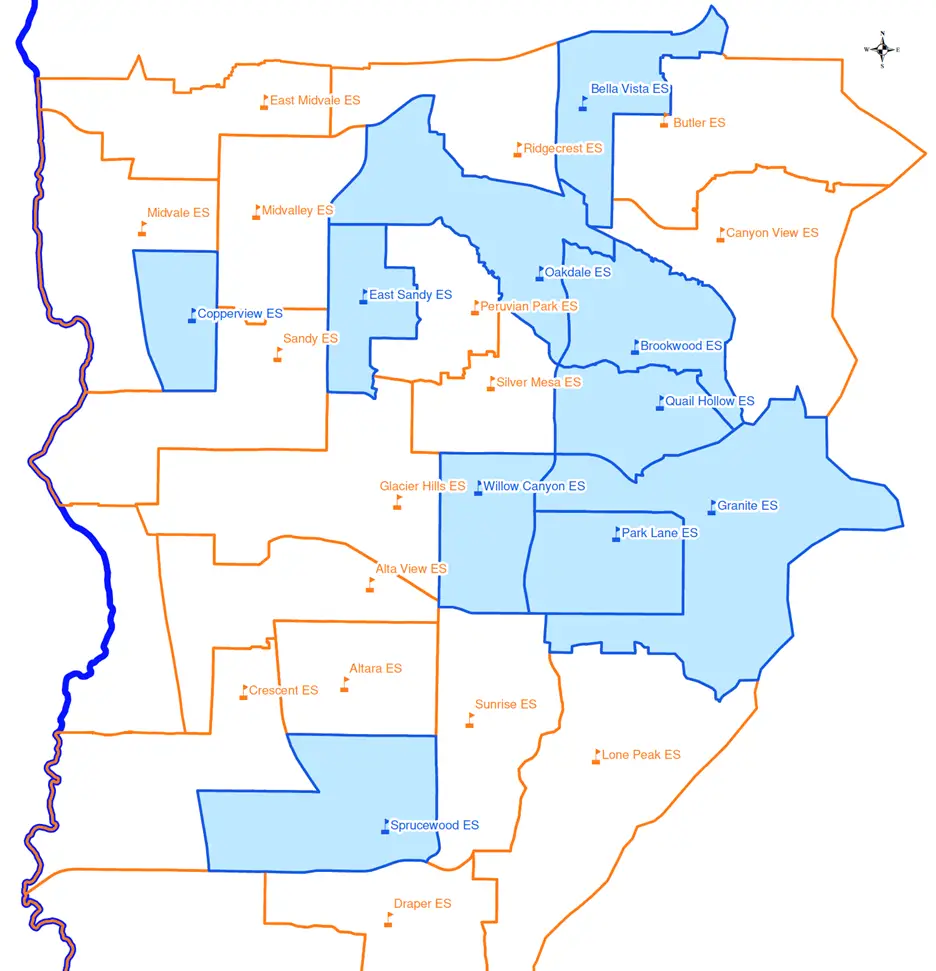
School boundary studies are sometimes needed to balance enrollments, due to population shifts or to address under-capacity schools. On Tuesday, May 6, 2025, the Canyons Board of Education authorized the District’s Long-Range Planning Committee to perform a boundary study of the following under-capacity elementary schools.
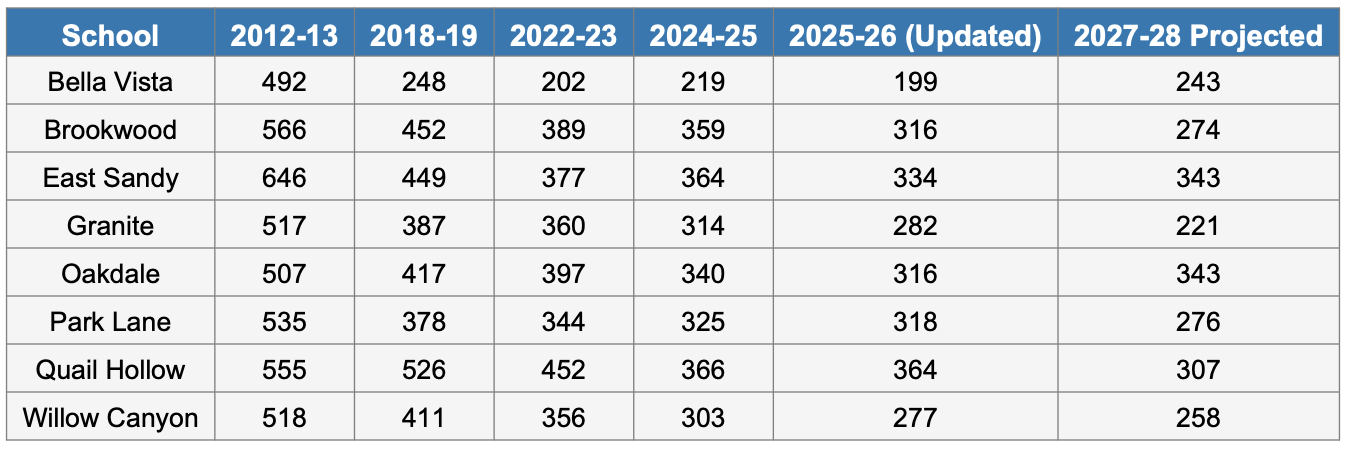
NOTE: Enrollments are from the District’s official Oct. 1 annual accounts, which are reported to the state — except for the 2025-2026 enrollments, which reflect the six-day count. Enrollments for 2012-2013 are included, because that was the final year before CSD’s grade reconfiguration, which moved 6th grade students from elementary schools to middle schools. Enrollment for these schools does not include any preschool programs housed at these schools. These enrollments do include special education units.
What are the goals of the boundary study?
Boundary studies are never undertaken lightly, but are sometimes necessary to respond to population shifts, and lay the groundwork for upgrading schools to serve combined school communities. The study is a proactive step to ensure all students continue to benefit from safe, well-equipped schools with strong academic programs — while being responsible stewards of taxpayer dollars. Even if schools are consolidated, our goal is to keep students and teachers connected, wherever possible. We are committed to:
- Maintaining optimal class sizes and access to academic opportunities
- Preserving relationship between students and teachers wherever possible
- Keeping neighborhoods together and ensuring safe routes to school
- Fairly distributing funding and staffing across schools
- Maximizing the use of taxpayer-funded school buildings
- Planning for projected fluctuations in enrollment to prevent future disruptions
- Planning for the upgrade and modernization of school facilities
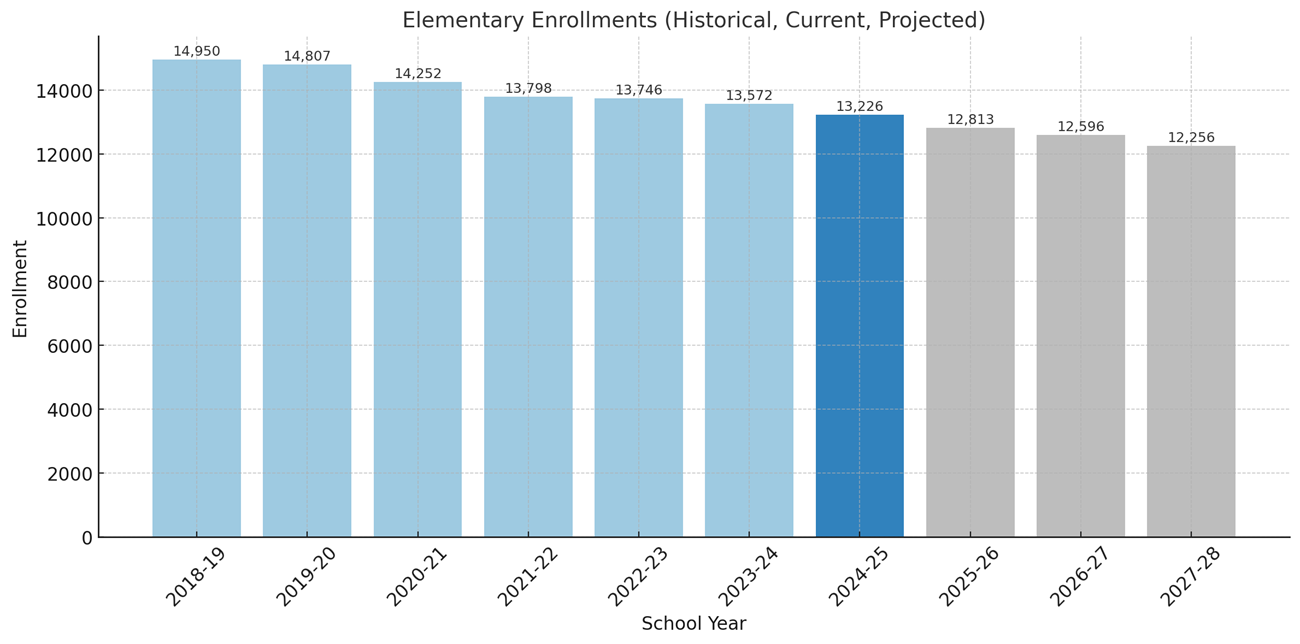
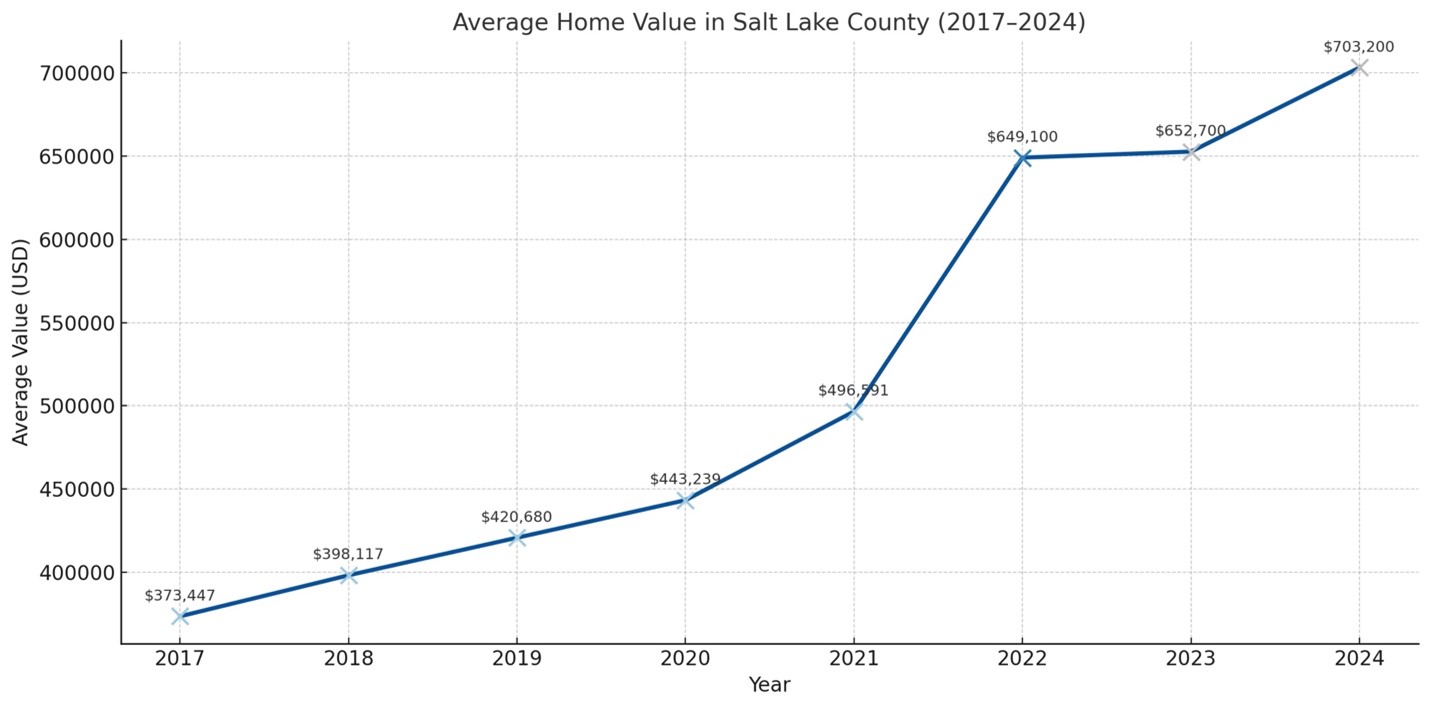
What is causing enrollment declines in some schools?
K-12 enrollment is falling nationally and is projected to continue to fall through, at least, 2031. Utah is no different. Once an outlier known for its unmatched fertility rate, Utah is also seeing a decline in its birth rate. This, coupled with soaring housing costs, is contributing to a drop in the school-aged population in Utah. These trends are so pronounced that, even though Canyons is capturing an increasingly larger share of the school-aged children who live within the District, enrollment is declining at some elementary schools.
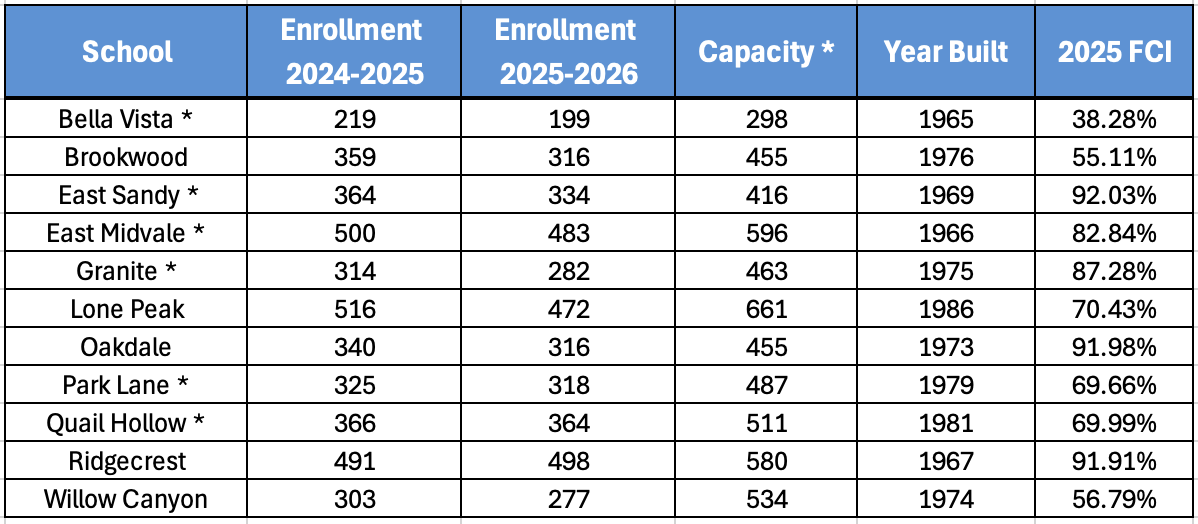
What is the physical condition of the schools that are being examined as part of the boundary study?
When Canyons was created in 2009, the school district inherited a portfolio of aging buildings, some of which hadn’t seen major upgrades in decades. In 16 years, the District has made huge strides, rebuilding or significantly remodeling 27 schools. These modernized buildings are safer, more efficient, and designed with today’s learners in mind. But the work isn’t done. With 49 buildings — ranging in age from 72 to two years of age — and 6.2 million square feet to maintain, Canyons is constantly juggling the day-to-day demands of upkeep while also planning for future improvements. The following Facility Condition Index (FCI) ranks the boundary-study schools according to their need for improvements and upgrades. Lower FCI scores indicate the building is in a comparably good condition. High FCI scores indicate the building is reaching its life expectancy. For a detailed description of how Canyons prioritizes facility needs, tune into Episode 112 of the Connect Canyons podcast.
Facility Condition Index
Is there an optimal size for an elementary school, in terms of enrollment?
When enrollment drops too low at a particular school, it becomes harder to offer the full range of academic programs, extracurricular activities, and services that families expect and students deserve. While there is no perfect size, the goal is to strike a balance so schools can give students personalized attention while also giving parents a choice of subject offerings, extracurricular activities, and class assignments. Optimally, in Canyons, we strive to have enough students to fill three to four classes per grade level — at minimum, two classes. In Utah, schools are funded on a per-pupil basis, and when enrollment drops cause a misalignment between class sizes and staffing ratios, school principals make difficult choices about how to allocate funding. For a detailed description of the data crunching that goes into determining how to staff schools, tune into Episode 112 of the Connect Canyons podcast. At the inception of the District in 2009, the Canyons Board of Education approved staffing ratios that are allocated for each grade:
- Kindergarten is staffed at 22.15 students per class
- Grades 1-3 are staffed at 22.3 per class
- Grades 4-8 are staffed at 26.3 per class
What will happen with the closed schools?
We have no plans to sell these schools. These buildings are valuable resources for our community, and we want to preserve them. Enrollment trends could shift over the next 10-15 years and we may need these properties again. In the meantime, we often use vacant schools as “swing sites” to temporarily house students while their schools are being renovated or rebuilt. This minimizes disruption for families and speeds up construction. Canyons takes great pride in in caring for its schools and we’ll continue to maintain these buildings so they remain an asset for years to come.
If schools are consolidated, what will happen to class sizes?
It may seem like bigger schools would translate to bigger class sizes, but the opposite is actually true. Consolidating schools helps us keep class sizes small and balanced. For example, if a school has only one first-grade class with 33 students, we can’t divide that group without doubling staff costs. But if 72 first-graders are together, we can hire three teachers and form classes of 24-25 students each. This way students continue to receive personalized attention while families enjoy a choice of class assignments and greater number of academic opportunities.
How much money is saved by consolidating schools or closing a school?
While teacher-staffing levels are student dependent, there are other personnel and non-personnel costs associated with keeping a school open — an estimated $1.2 million per elementary school. If a school is combined with another school, the District would work to find open positions for any personnel who are displaced. Because teacher staffing is student-dependent, teachers follow students. If and when the obligatory transfer of teachers becomes necessary, teachers will be invited to submit their first and second choice of assignment in line with District policy. With support staff, it has long been the District’s practice to handle any programmatic shifts through attrition.
When do the changes take effect?
Any changes proposed or approved by the Canyons Board of Education would take effect no sooner than the start of the 2026-2027 school year.
What priorities are guiding the District’s boundary decisions?
Boundary studies are never undertaken lightly, and any changes that come from this study will be done with care, compassion, and community input. Even if schools are consolidated, our goal is to keep students and teachers connected, wherever possible. We are committed to:
- Maintaining optimal class sizes and access to academic opportunities
- Preserving relationship between students and teachers wherever possible
- Keeping neighborhoods together and ensuring safe routes to school
- Fairly distributing funding and staffing across schools
- Maximizing the use of taxpayer-funded school buildings
- Planning for projected fluctuations in enrollment to prevent future disruptions
- Planning for the upgrade and modernization of school facilities
My child’s school boundaries are changing and we’re being assigned to a different school. Will my child have to move schools?
Not necessarily. If your student is currently enrolled in a school at the time boundaries shift, you can apply for a School Choice transfer permit to have your child continue attending that school until they complete the final grade offered there, or age out. These permit requests will be given priority consideration. Siblings of current students, even those who are attending on permit, will also receive priority consideration in the permit process. The school transfer application window for the 2026-2027 school year opens Saturday, Nov. 15, 2025, at 10 a.m. and closes at midnight on Friday, Feb. 6, 2026.
Note 1: Keep in mind that in line with Canyons District policy, transportation services are only provided for students who live within a school’s official boundary. Students who choose to stay at their school after a boundary change may lose access to busing and will need to arrange their own transportation.
Note 2: Per District policy, permits do not follow students to middle school and high school. If a student lives outside the boundaries for their preferred secondary schools, they will need to apply for permits to attend those schools.
What happens to the Open Enrollment permits of out-of-district or out-of-boundary families who currently attending a school that is being closed? Will their permit follow them to the new boundary school?
Yes. Students who are attending a school on a permit that is being closed will automatically be able to move to the new boundary school. In other words, their Open Enrollment permit will move with them. If they live outside the boundaries for that school’s feeder schools (middle school and high school), they will need to apply for permits to attend those schools.
How do boundary changes affect Open Enrollment (permit) season?
Families not impacted by boundary changes will apply for permits as usual during the regular Open Enrollment window (Nov. 15, 2025 – Feb. 6, 2026). Families impacted by a boundary change will have the opportunity to apply for an Open Enrollment permit to stay at their current school until they age out. Schools will not process any permits — boundary or Open Enrollment — until after Feb. 6, 2026. After boundary-impacted permits are honored, schools will review Open Enrollment permits in the order received, based on space availability. Families may continue to submit permits after Feb. 6, but placement will depend strictly on space.
How might Utah’s Open Enrollment law impact the proposed boundary changes?
Utah is an Open Enrollment state, which means that students may attend any public school of their choice, as long as the school has the capacity, and the student is willing to provide their own transportation. Therefore, even when boundary changes are made, many students can and will decide to choose a school other than their boundary school. This means that the full impact of any boundary adjustments are not generally felt until several years after the change has been made.