What does it take to prepare a student for the future?
Strong academic skills matter. But success in college, the workplace, and life also depends on qualities that aren’t always captured by a test score: the ability to solve problems, work with others, generate ideas, persist through challenges, and contribute to a community.
Those skills are at the heart of Canyons School District’s Portrait of a Canyons Scholar, a framework that defines the habits every student should develop by the time they graduate from high school. Canyons is now piloting an effort in its middle schools to intentionally embed these competencies into everyday learning.
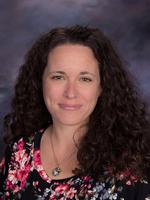
“Teachers and students are talking about what the characteristics mean, educators are recognizing them when students demonstrate them, and students are beginning to reflect on their own growth,” says Canyons Middle Schools Director Angi Holden. She joined Assistant Superintendent Mindy Robison for a Connect Canyons episode on what it takes to move the Portrait of a Scholar from paper into practice.
Canyons’ Portrait of a Scholar grew from the District’s Strategic Plan and identifies five aspirational character traits: innovator, critical thinker, resilient learner, collaborator, and impactful citizen.
“These are really those skills that make us successful,” explains Robison. “It’s those skills that allow us to work through challenges, to be productive.”
While serving as principal of Midvale Middle School, Robison worked to intentionally weave these skills into classroom learning. Students who may not have viewed themselves as academically accomplished began recognizing strengths in themselves.
And highlighting those abilities actually reinforced academics, Robinson says. “Academics are hard if you’re not a critical thinker.”
Holden says middle schools are the “sweet spot” for making those connections explicit.
Students are moving from the more structured environment of elementary school into a world with multiple teachers, increasingly complex coursework, and greater independence.
“We want to embed these skills into middle school now so that students have that ownership, that they own their journey,” Holden said.
Employers and colleges have voiced the need to build these skills early. CSD’s teachers are also eager to see them take root, and are already finding ways to plug them into their curriculum with toolkits provided by the District.
A science lab, for example, naturally requires students to collaborate. Teachers can call that out by asking: What does a good team member do during a lab?
Schools have flexibility to determine how the Portrait of a Scholar best fits their students and existing systems.
At Butler Middle, students see classroom posters that put the Portrait characteristics into student-friendly language and link them to classroom expectations.
Midvale Middle is emphasizing collaboration, including the importance of showing up to school and being present to learn and work with others.
Union Middle invites students to reflect on these skills each week through class prompts.
That reflection is important, Holden said, because students need to be able to identify their strengths, recognize where they can improve and take greater responsibility for their growth.
Teachers are reflecting, too, meeting in weekly professional learning communities to discuss what evidence they are seeing and which instructional approaches are working. Schools then provide feedback at the end of each quarter so the District can refine the approach.
What’s more, the District is developing a Portrait of a Canyons Scholar brochure that will include questions families can use to turn the five characteristics into conversations at home.
“If we can create that mindset of growth and progression and consistency,” Holden said, “I think that sets our students up for success as they leave us in the education system and out into the real world.”