All rise. Court is in session.
Canyons District’s nationally recognized Peer Court has empaneled this year’s student judges, who have already started their year as the fair-minded arbiters of justice for school-rule infractions committed by their fellow students.
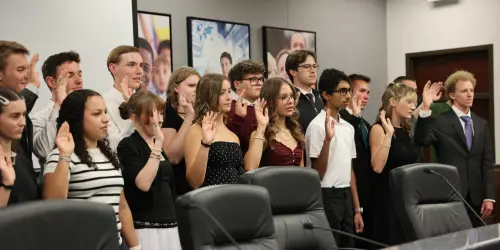
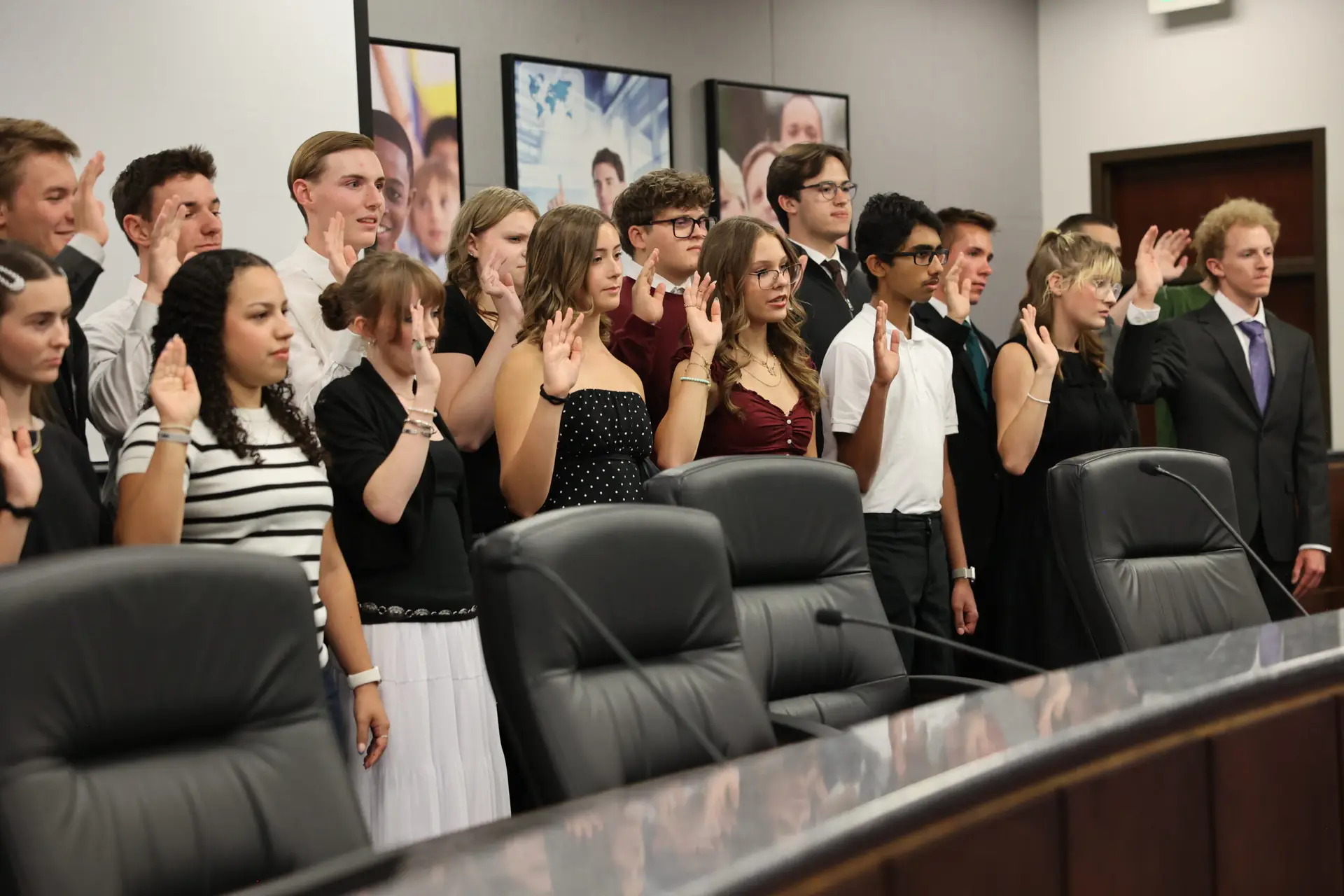
Before the first case of the 2026-2027 school year was heard, however, the 28 high school student-judges, who were selected through an application process, stood to take an Oath of Office.
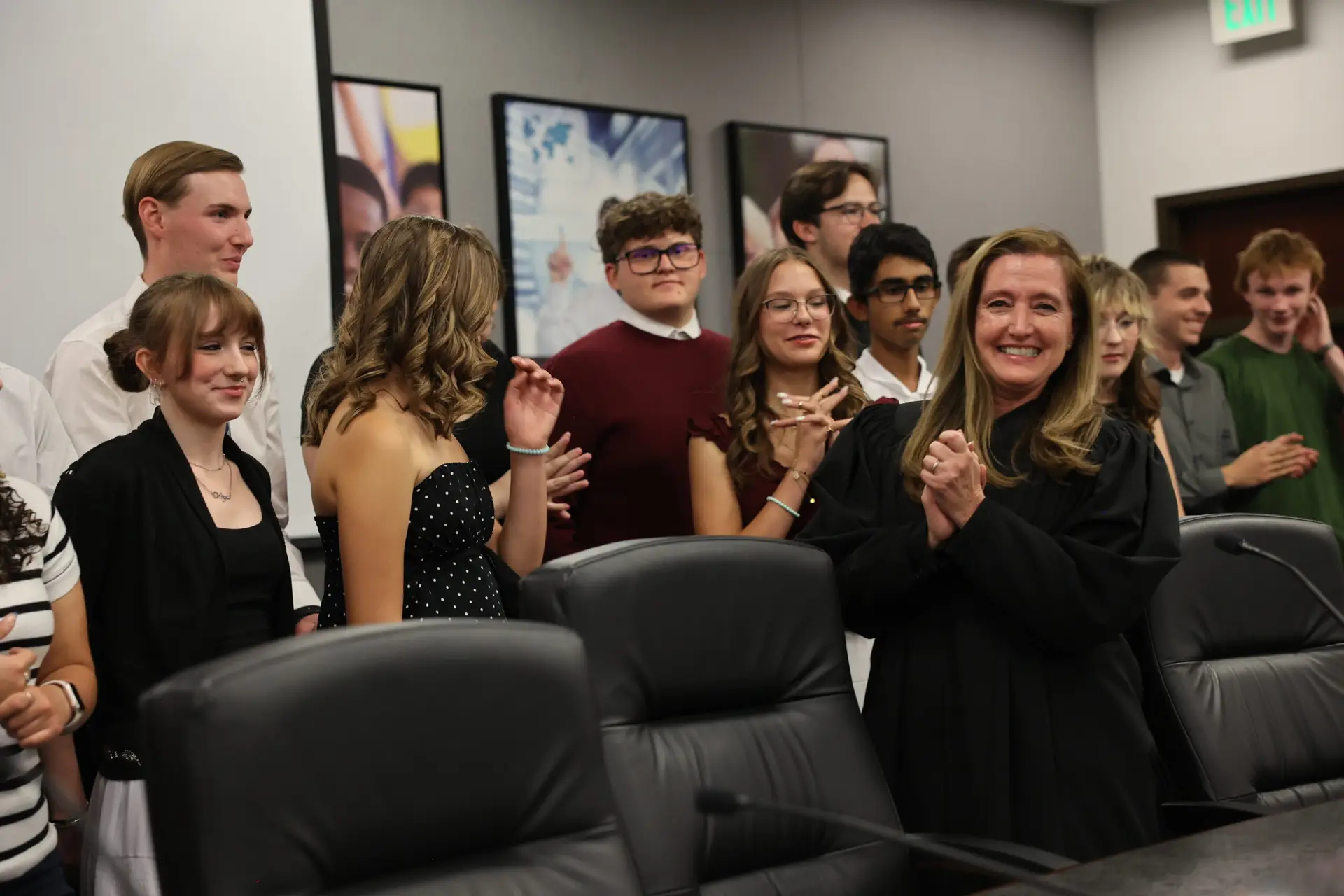
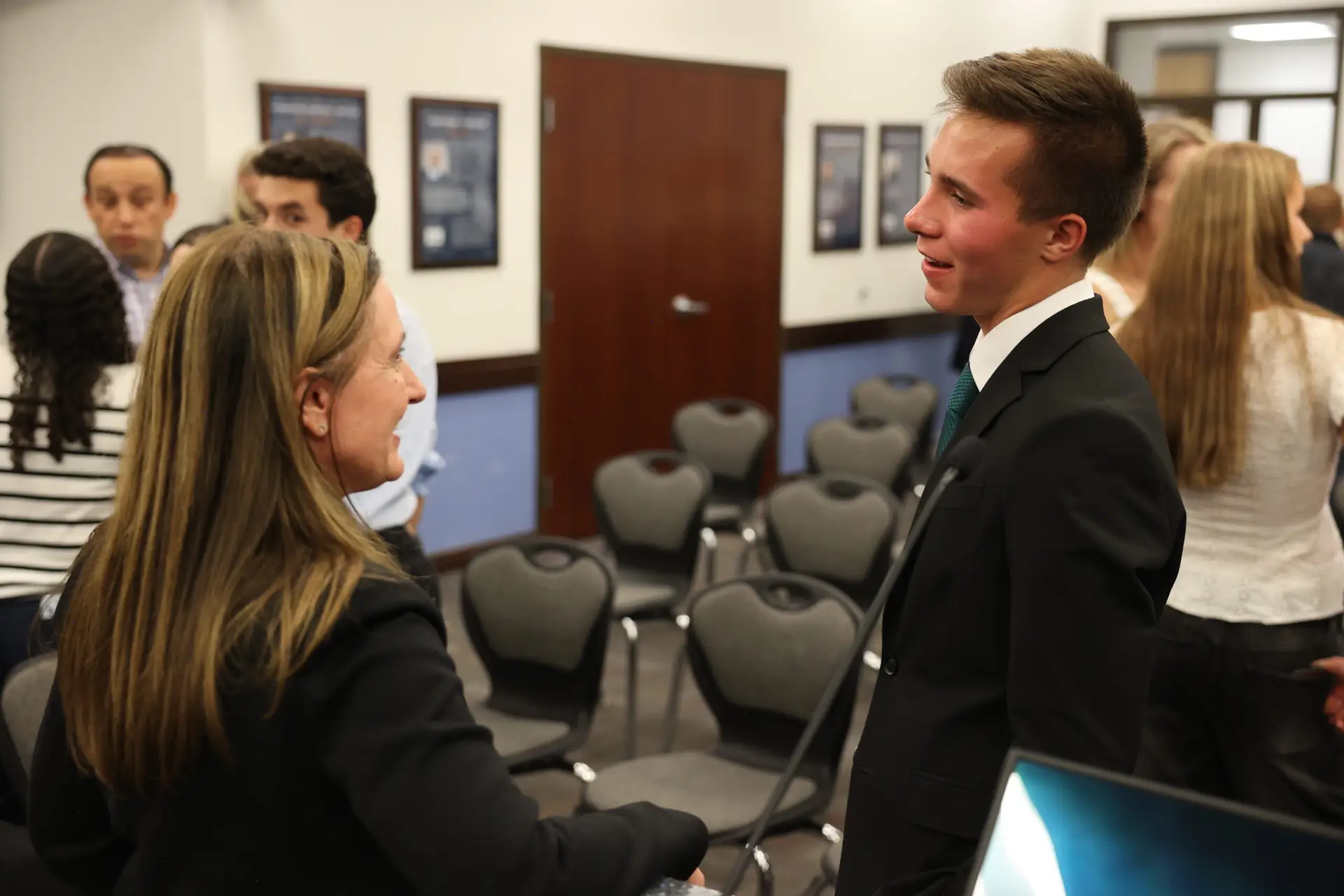
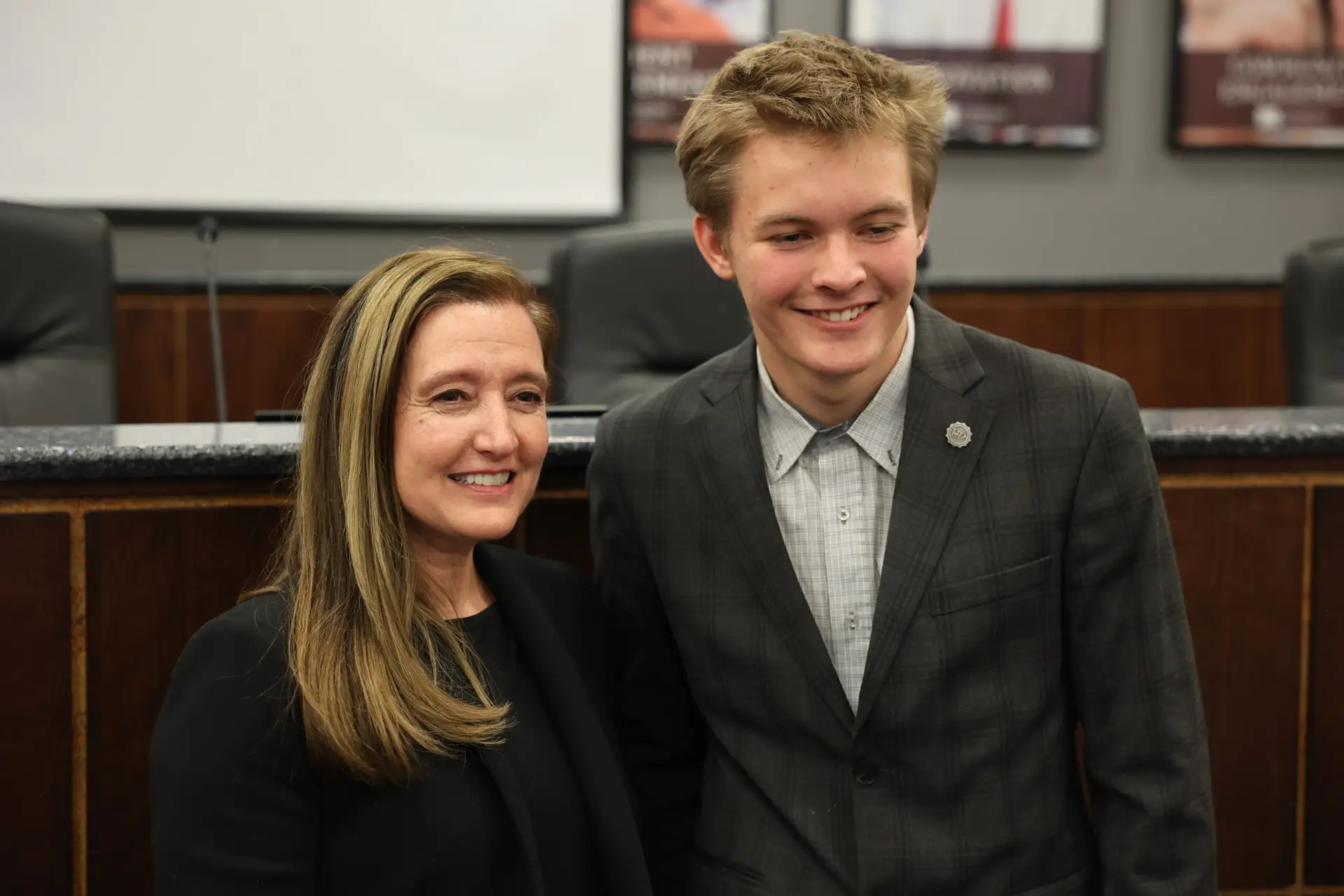
This year, the swearing-in ceremony was conducted by Utah Supreme Court Justice Jill Pohlman.
At the recent ceremony held in the Chamber of the Canyons Board of Education, Associate Chief Justice Pohlman, a graduate of Alta High, told the student-judges they will forever be changed by the experience of serving on Canyons’ Peer Court, which is just the second youth court in Utah sponsored by a school district.
Through the real-world experience on Peer Court, during which they will mediate disputes and decide how students can right their wrongs, the student-judges will learn the true meaning of empathy and accountability. They also will hone their critical-thinking, active-listening, and public-speaking skills, Pohlman said.
When Pohlman served on the Utah Court of Appeals, she often was asked if it proved challenging to fairly examine the cases involving heart-wrenching crimes. While difficult, Pohlman said, she also grew to have a deeper understanding of the “varied experiences we all have.”
“The most surprising thing was (hearing about) the difficulty of people’s lives and challenges,” she said. “The real growth I had was to feel differently about defendants. It didn’t mean we wouldn’t hold them accountable” but there was a greater insight about the long-lasting impact of trauma.
Program Administrator Charisse Hilton has overseen CSD’s Peer Court since it first started hearing cases in the 2020-2021 school year. “This is definitely a model program,” said Hilton, who has presented at national conferences about CSD’s Peer Court successes. “I believe in this program. I believe in what it does for kids.”
Hilton said Peer Court holds students accountable for minor offenses such as fighting, vandalism, or shoplifting. It’s also seen as a more effective path to justice than suspension or expulsion, which can increase students’ risk of dropping out or entering the juvenile justice system.
In weighing their sentencing, student judges pose a lot of questions to find out some of the reasons why some behavior is exhibited by the students referred to Peer Court. Then, they examine the various ways the student can repair any harm created by their choices.
“Some nights are heavy,” Hilton said. “It will open your eyes to the challenges that some of our students face.”
Hilton said Peer Court judges provide about 2,000 volunteer hours throughout the school year. Peer Court typically meets weekly to hear cases ranging in issues from fighting to vandalism to vaping.
“They are making a difference in the lives of other students, their peers,” Hilton said.