Tools
Resources
About
View District Performance Levels* Due to new ELA assessments, the release of the 2024-2025 report card from USBE will be significantly delayed
View District Performance Levels* Due to new ELA assessments, the release of the 2024-2025 report card from USBE will be significantly delayed
More than 70 years of research consistently documents the power of immersion programs to help students attain high levels of second language proficiency. No other type of instruction, short of living in a second-language environment, is as successful.
Young children especially thrive in this type of instructional environment. Interestingly, language immersion is also the least expensive way to deliver second-language instruction.
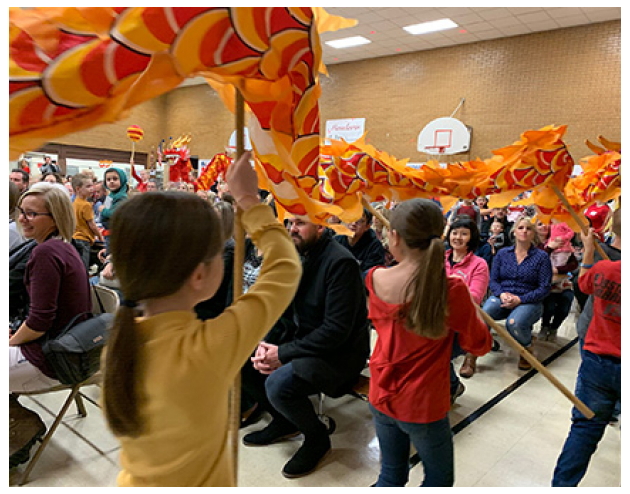
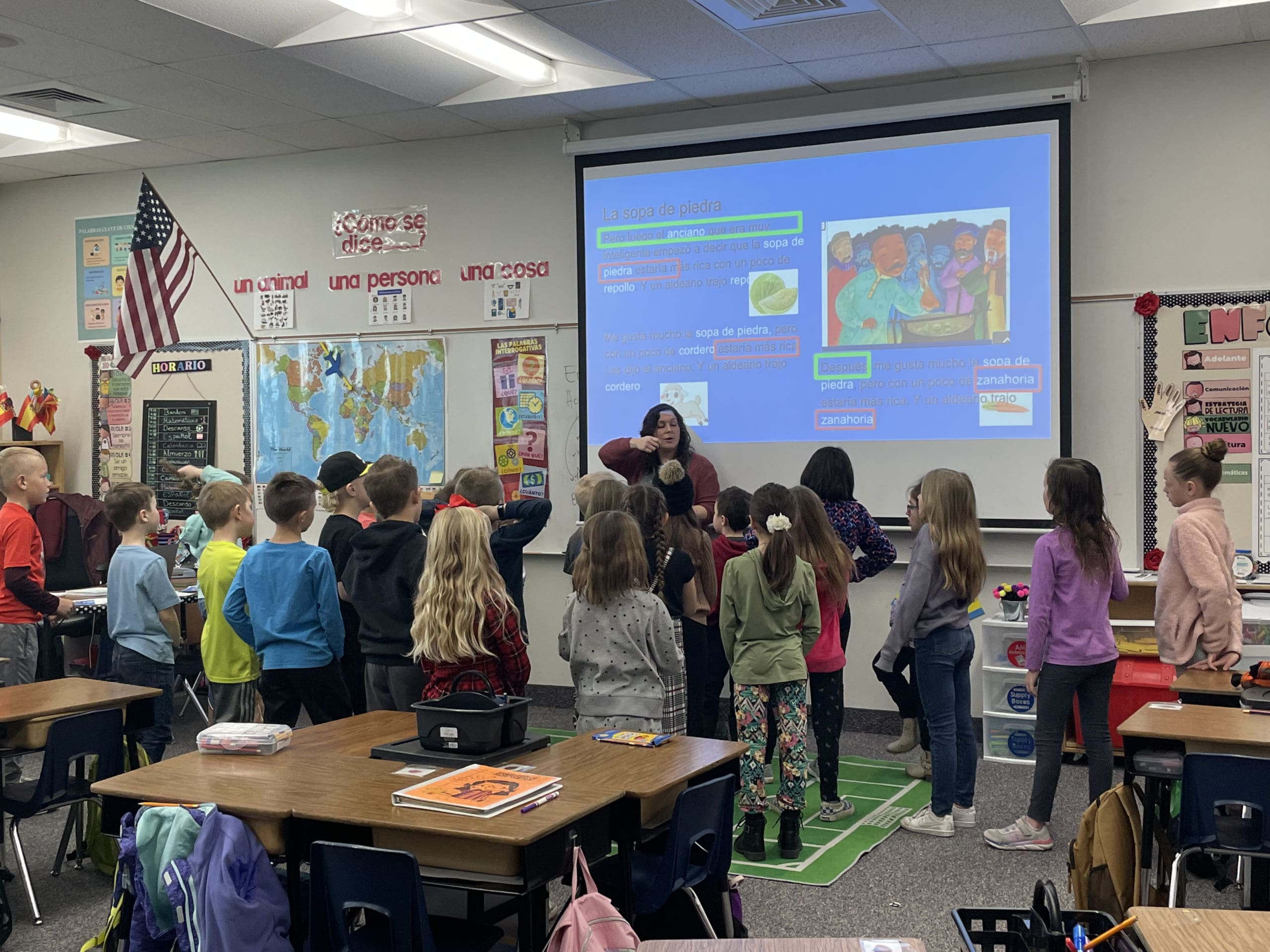
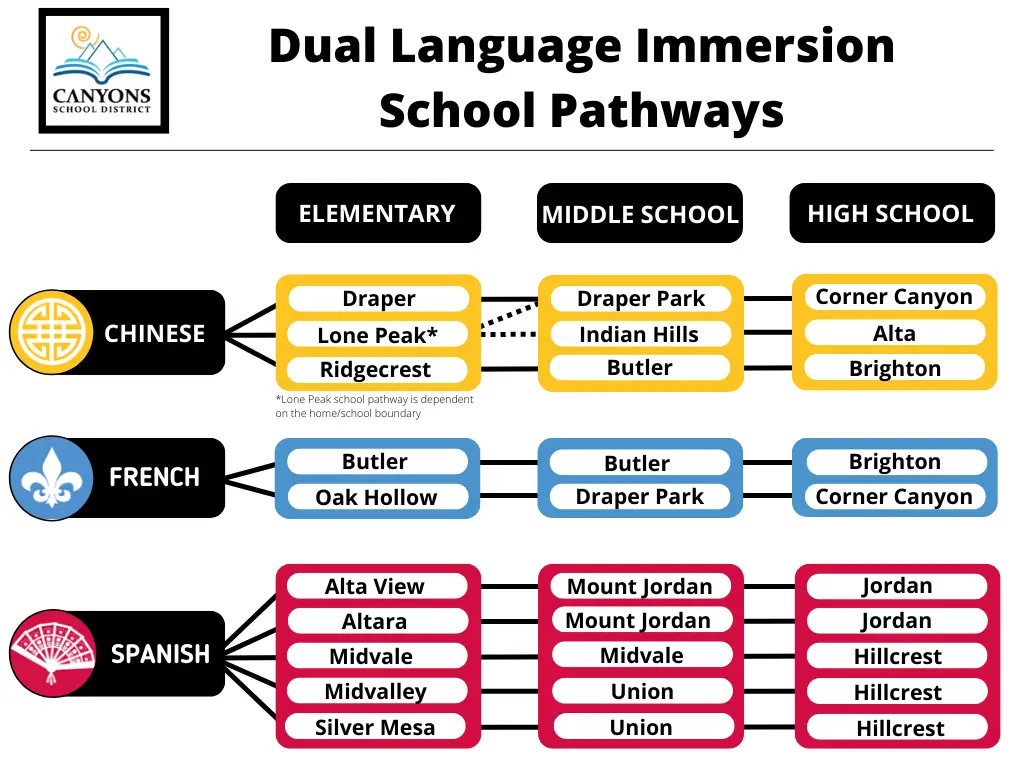
Dual-Language Immersion programs are designed to help students achieve literacy in a world language. Students typically enter the program in first grade and spend half of their day learning in English and the other half learning in Spanish, French, or Mandarin Chinese. The program continues through high school where students have the opportunity to take Advanced Placement (AP) and college-level language courses.
All incoming first-grade students are welcome to apply. Applications may be submitted after the lottery window. Late applicants will be added to the waitlists of their top three choices. Should a program have open seats, late applicants may be added to the program.

The dual immersion program seeks to enroll students of all backgrounds and abilities. Initial enrollment is open to all students entering 1st grade.
An annual lottery is held to determine initial entrance to each program for entering first graders. Applications for the lottery are submitted during a child’s kindergarten year. Applicants will only be entered into the lottery for the school identified as their first-choice. Applicants not selected for their first-choice will be considered for their identified second and third choices, if there is space available.
All DLI classrooms are capped at 28 students. In order to accommodate building capacity and additional school programming, each school determines how many out-of-boundary students it can accept through the lottery process.
Preference will be given to:
If a student exits a dual language immersion program in the first or second grade, students on the waitlist will be invited to enroll in the program. The waitlist remains active as follows:
Once the waitlist is deactivated, only students who can demonstrate a comparable level of language proficiency will be added to dual immersion programs.
Yes. If a student can demonstrate a comparable level of language proficiency for their current grade level and there is space available, a student will be considered for late enrollment to a program. Language proficiency must be verified with a language assessment. To arrange language assessment for late enrollment, contact the Instructional Supports Department, 801-826-5026.
Current Enrollment Status
Open: Seats available
Full: program is full and there is not a waitlist
Waitlist: Program is full and taking waitlist applications (only applicable to 1st and 2nd grade)
Students who wish to enroll in late 2nd grade thru 5th grade must take and pass a target language proficiency assessment.
2025-2026 School Year
Chinese | |||||
1st Grade | 2nd Grade | 3rd Grade | 4th Grade | 5th Grade | |
Draper | Open | Open | Open | Open | Open |
Lone Peak | Open | Open | Open | Open | Open |
Ridgecrest | Open | Open | Open | Open | Open |
French | |||||
1st Grade | 2nd Grade | 3rd Grade | 4th Grade | 5th Grade | |
Butler | Waitlist | Waitlist | Full | Open | Open |
Oak Hollow | Open | Open | Open | Open | Open |
Spanish | |||||
1st Grade | 2nd Grade | 3rd Grade | 4th Grade | 5th Grade | |
Altara | Waitlist | Waitlist | Open | Open | Open |
Alta View | Waitlist | Waitlist | Open | Open | Open |
Midvale | Open | Open | Open | Open | Open |
Midvalley | Waitlist | Waitlist | Open | Open | Open |
Silver Mesa | Waitlist | Waitlist | Open | Open | Open |
I am text block. Click edit button to change this text. Lorem ipsum dolor sit amet, consectetur adipiscing elit.
Thursday, October 9, 2025
6:30 – 8:00 p.m.
Canyons Center at the Canyons District Office
9361 S. 300 E. in Sandy.
Students can continue with the Dual Language Immersion program through high school where they can work to pass an Advanced Placement exam and take college-level courses for early college credit.
Prior to 5th and 8th grade DLI students advancing to middle and high school, they must complete an Intent-to-Continue form to choose one of three options:
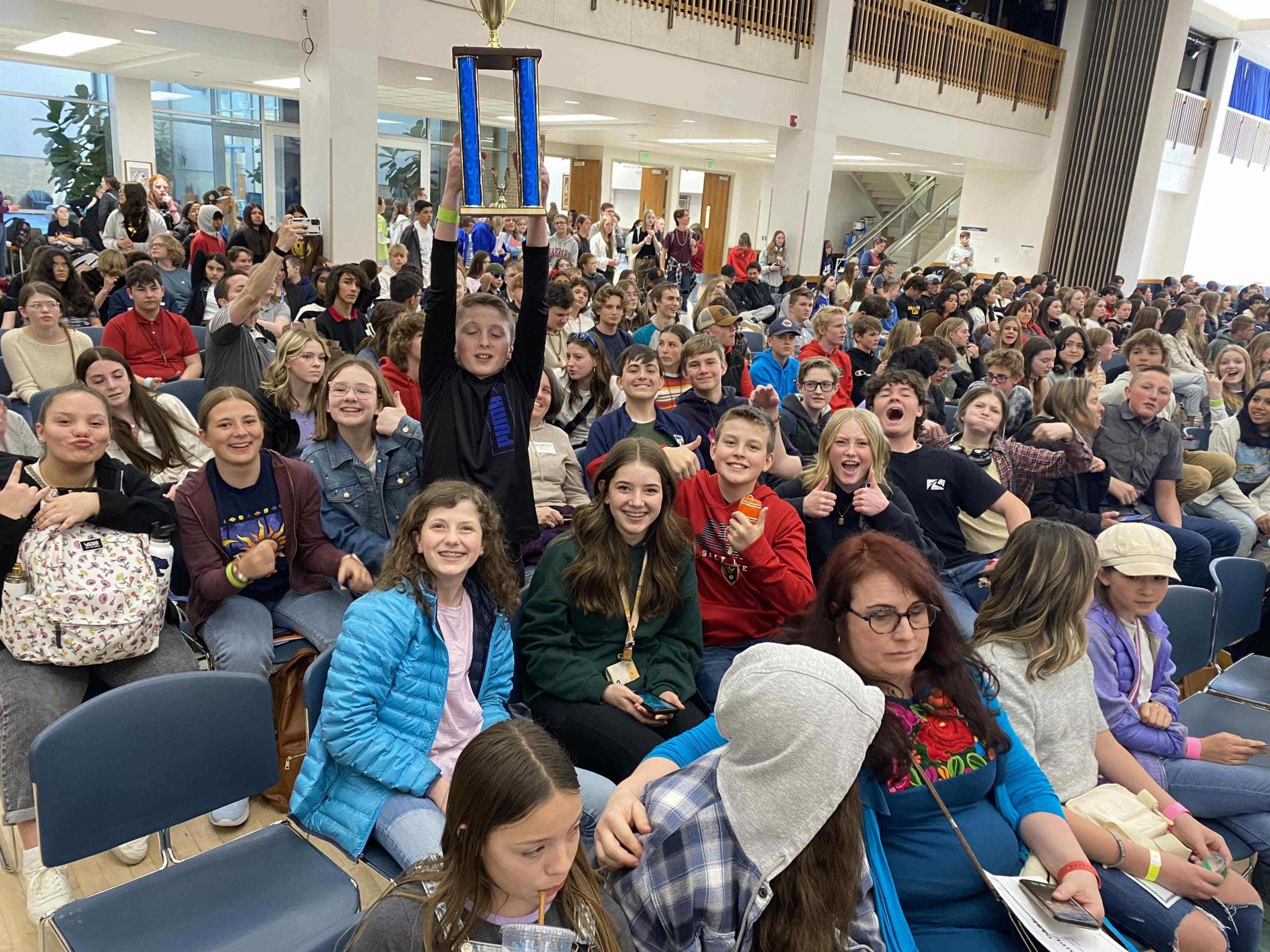
9th grade students take DLI 5 in the target language. Students have the opportunity to take the AP exam at the end of DLI 5 in 9th grade. If a student passes the AP exam with a 3 or above, they are eligible for Bridge Courses in 10th, 11th, and 12th grade.
If you do not pass the AP exam with a 3 or above in 9th grade, you can enroll in a standard AP class in 10th grade.
DLI 5 is designed especially for 9th grade DLI students. The essential questions and projects of the course are unique to 9th grade DLI. This course, while separate from AP, is still aligned with AP themes and tasks and works to prepare students for success on the AP exam.
Credits awarded for passing the AP exam varies by university and college. Some universities and colleges award lower level elective credits for passing the AP exam. The number of credits also varies by AP score. These credits generally do not count towards a major or minor in the language.
3000 level University courses co-taught with a High School teacher and University Professor on the high school campus. The Bridge Program offers advanced language university courses for high school students who have passed the Advanced Placement (AP) Language and Culture Exam, “bridging” the gap between completion of the exam and higher education. Students begin upper division university language course work in the high school setting, where each 3-credit college course extends over a full academic year of high school. This rigorous and supportive environment establishes a university and career pathway in two languages, and seeks to promote access to bilingual, biliterate, and bicultural citizenship in Utah.
Students who pass the AP exam in 9th grade with 3 or above are eligible for Bridge courses in 10th, 11th, and 12th, grade. If students take 3 Bridge courses, they could graduate with 9- 3000 level University credits that count towards a major or minor in the language. Most universities require 15-18 credits to earn a minor
Episode 38: What is Dual Language Immersion? Canyons Embarked on this Educational Experiment in 2009, and Here’s How it’s Going
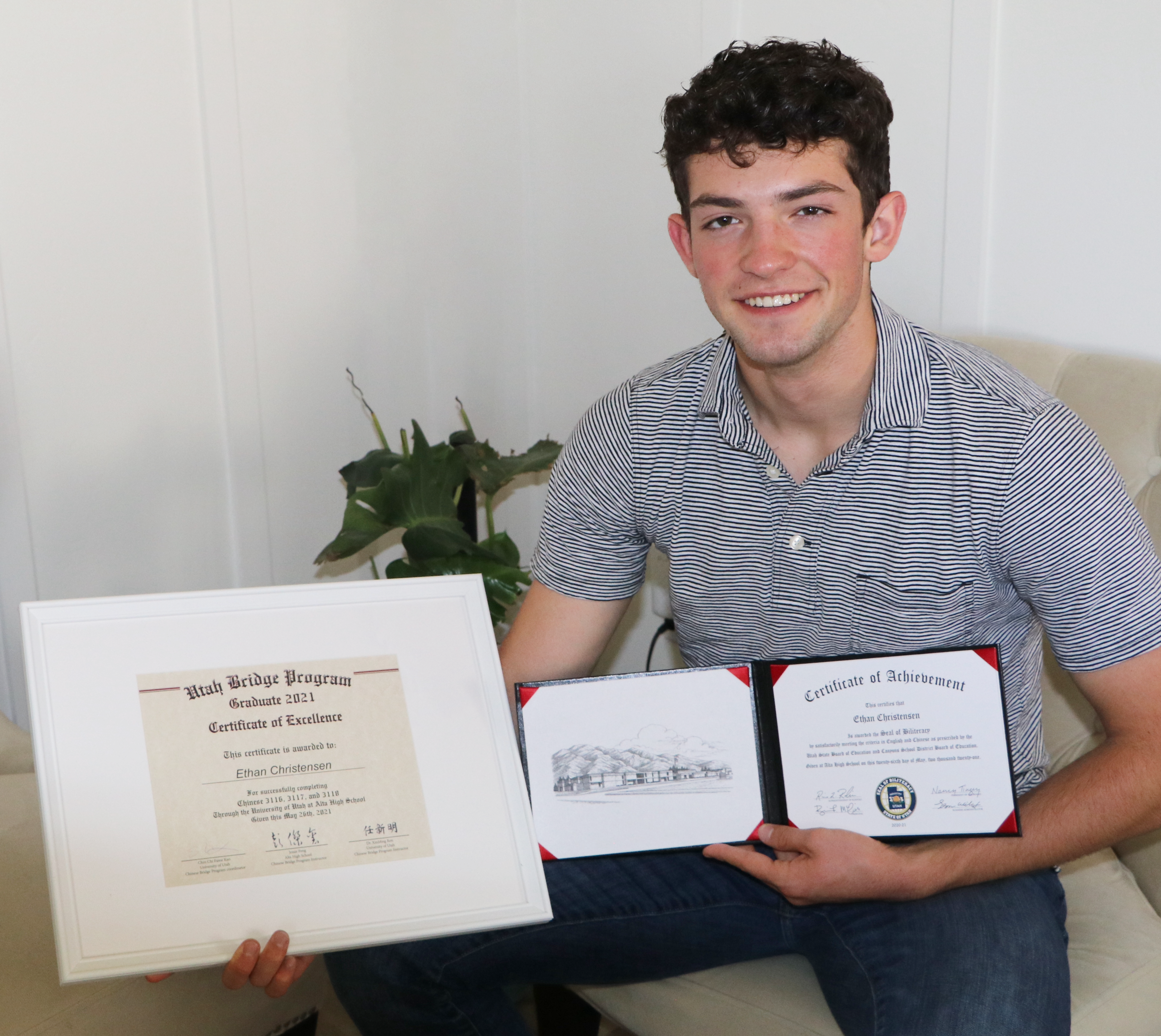
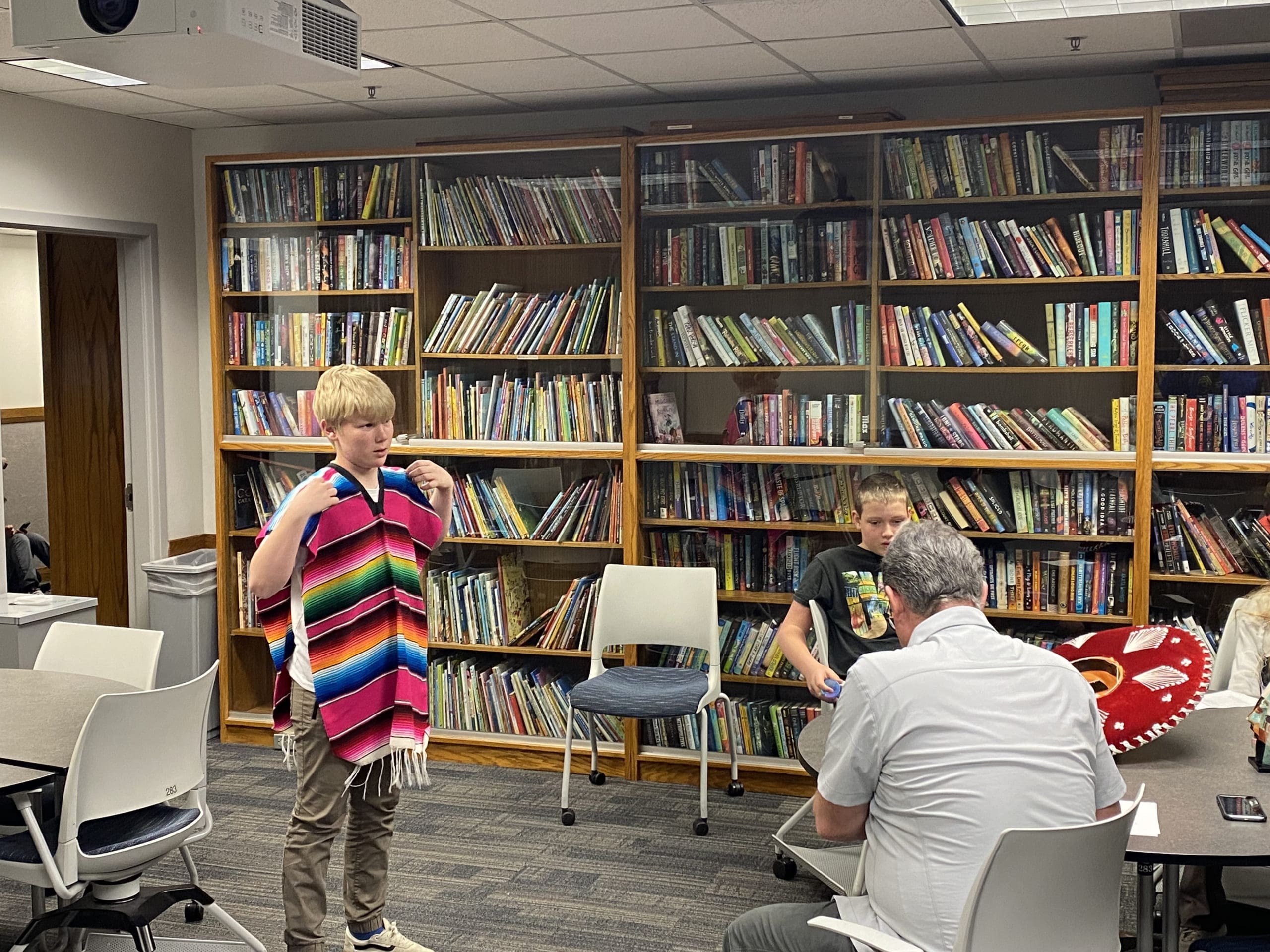
It really is about learning about the language and culture that isn’t yours. It allowed us to get a better understanding of that (culture) and expand our perspective and it makes you more open-minded. I think that’s a very big benefit that I’ve experienced from doing the program — and to gain proficiency in another language.”
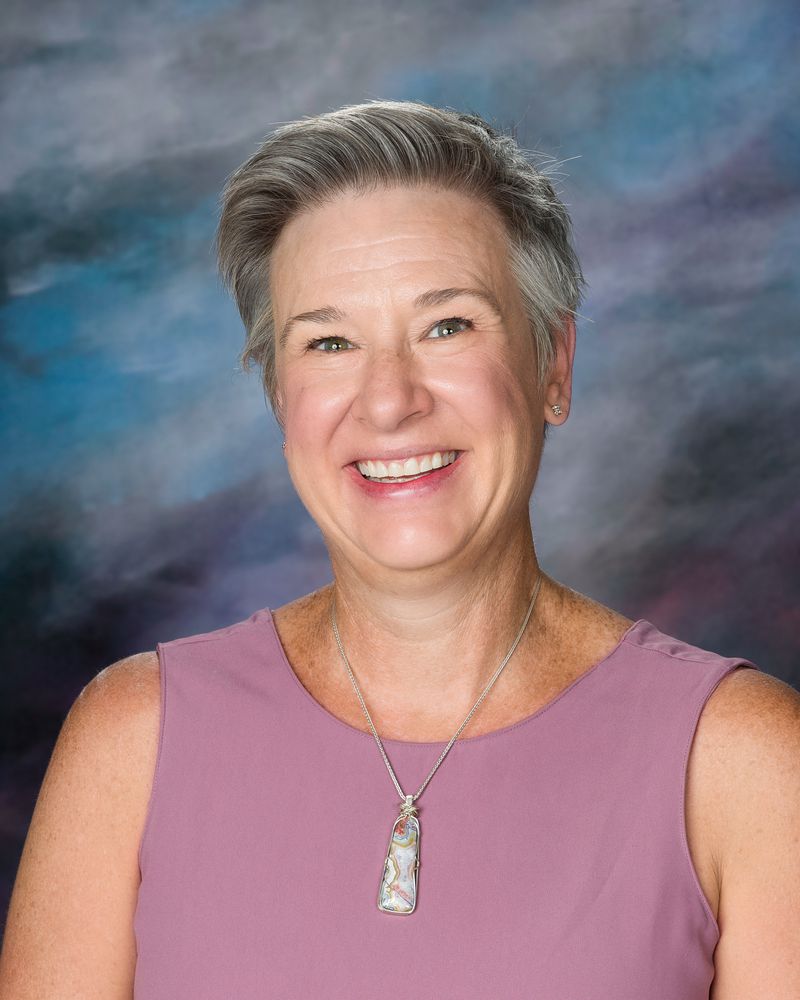
What a magical gift it is to give a student the ability to learn another language and be multilingual. The students in the program have an opportunity to problem solve every day and I think that really develops their neural pathways in a way that’s quite unique. It helps kids learn how to think rather than what to think, which is really our goal.
Questions?
Canyons School District is committed to making this website compliant with the ADA. At this time, we recognize that not all areas of this website may be ADA compliant. We are currently in the process of redesigning and creating new website content to be compliant with the W3C Level Two guidelines. If you are experiencing issues with this website, please contact us here communications@canyonsdistrict.org
If a movie about super teachers were ever made, Lucie Chamberlain would be a prime candidate for a leading role. Fortunately for her kindergarten students at Alta View Elementary, she already thrives in a supporting role for them. Parents thank her for being a “super teacher.” She is also described as an “amazing colleague.” Whether students need help in the classroom or from home while sick, Lucie goes above and beyond to help them learn, overcome fears, and feel important and cared for. Lucie is the reason a number of kids went from hating school to loving it, according to parents. The way she exudes patience, sweetness, positive energy, and love for her students with special needs melts is appreciated and admired. One parent noted: “Both my kids wish she could be their teacher forever.” Another added: “She treats every student like their learning and their feelings are her priority.” Super teacher, indeed!